Tandem: Love in Sync
Academic Capstone Project
Overview & Objective
Tandem is a digital platform designed to help couples build stronger, more intentional relationships through shared experiences, reflection, and alignment. Rather than introducing entirely new behaviors, Tandem enhances the ways couples already connect by capturing meaningful moments, encouraging thoughtful conversations, and supporting shared goals.
At its core, Tandem functions as a living timeline of a relationship. It allows partners to document their journey together, revisit meaningful milestones, and stay in sync as they grow. The experience is designed to feel seamless and low-effort, integrating naturally into users’ daily lives without adding pressure or obligation.
Many relationship-focused apps attempt to improve connection by introducing new habits, tasks, or systems. However, these often feel like obligations rather than meaningful experiences, leading to disengagement over time.
Our challenge was to answer the question:
How might we design a digital experience that strengthens relationships without making love feel like a task?
Tandem’s Final Designs
Home
-
![]()
Home
-
![]()
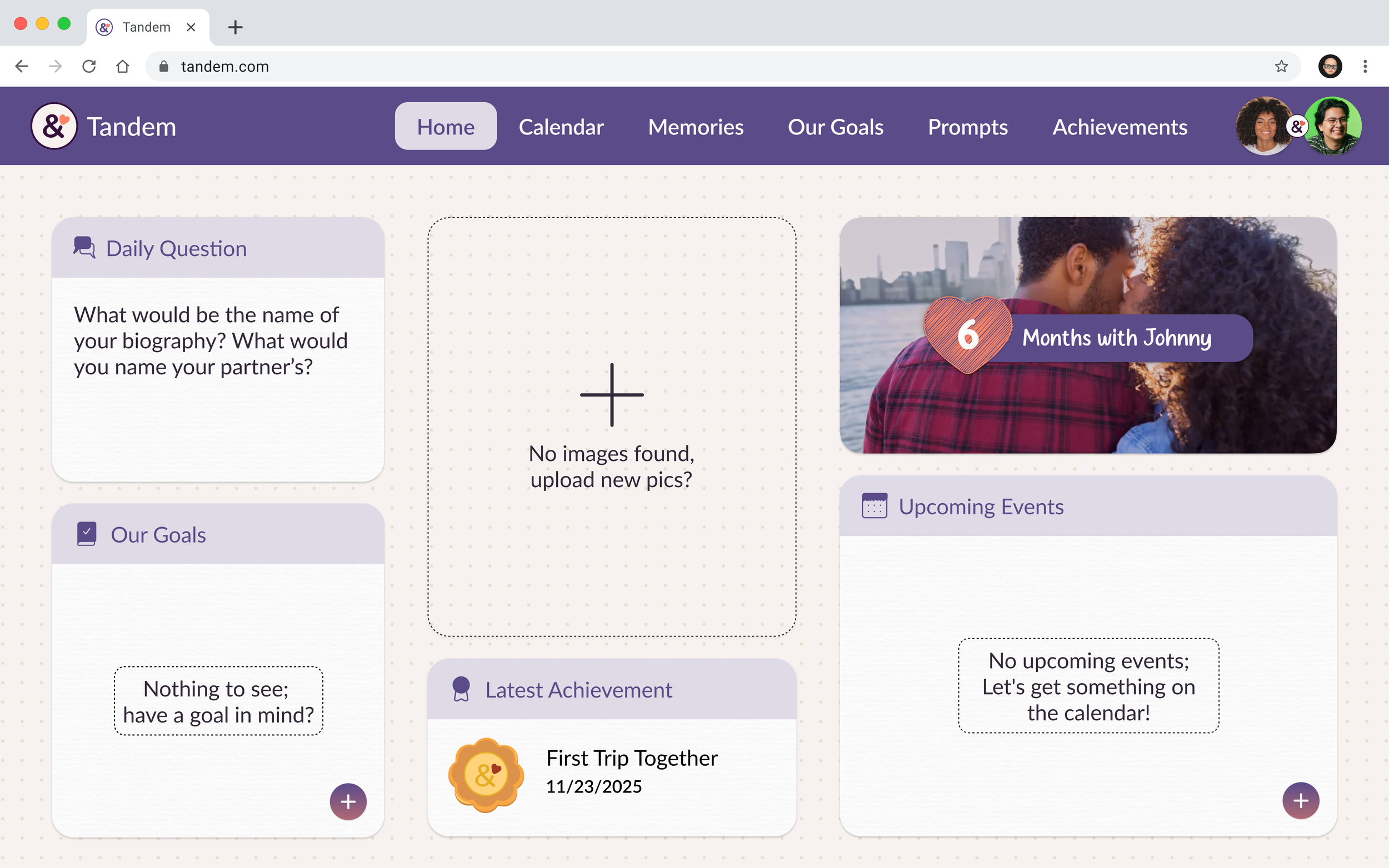
Home - Empty State
Calendar
-
![]()
Calendar - Month View
-
![]()
Calendar - Week View
-
![]()
Calendar - Day View
-
![]()
New Event
-
![]()
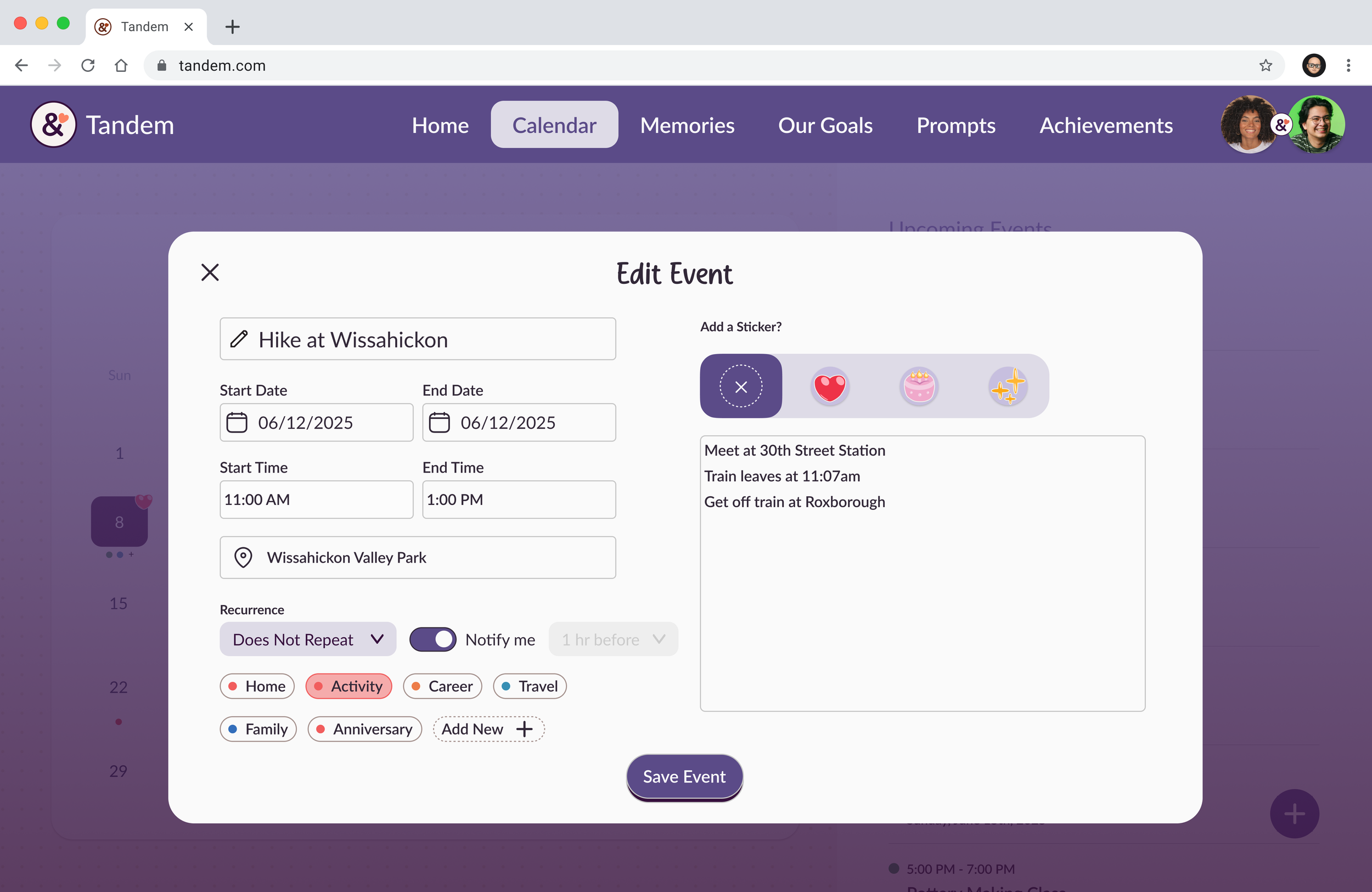
Edit Event
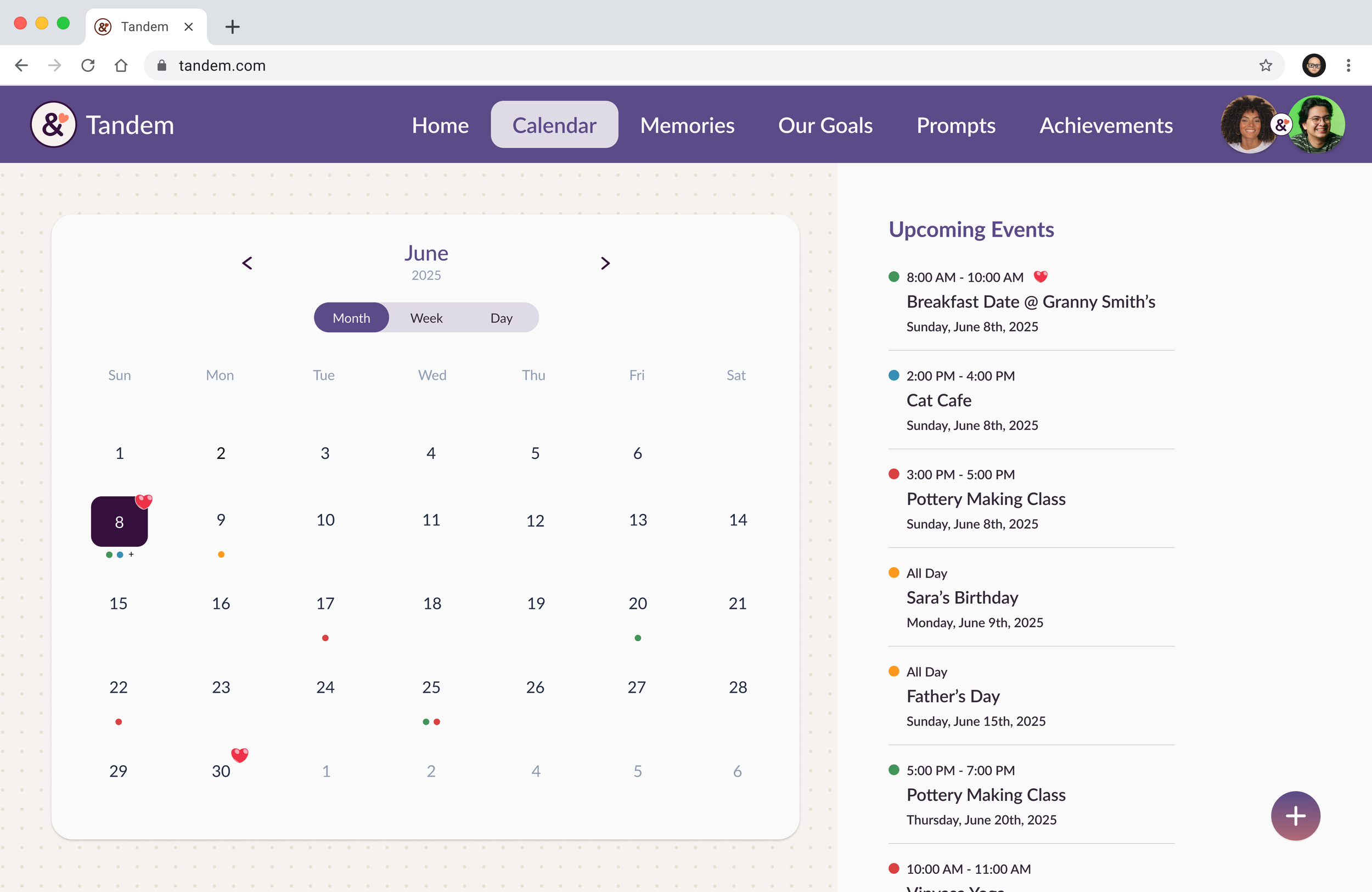
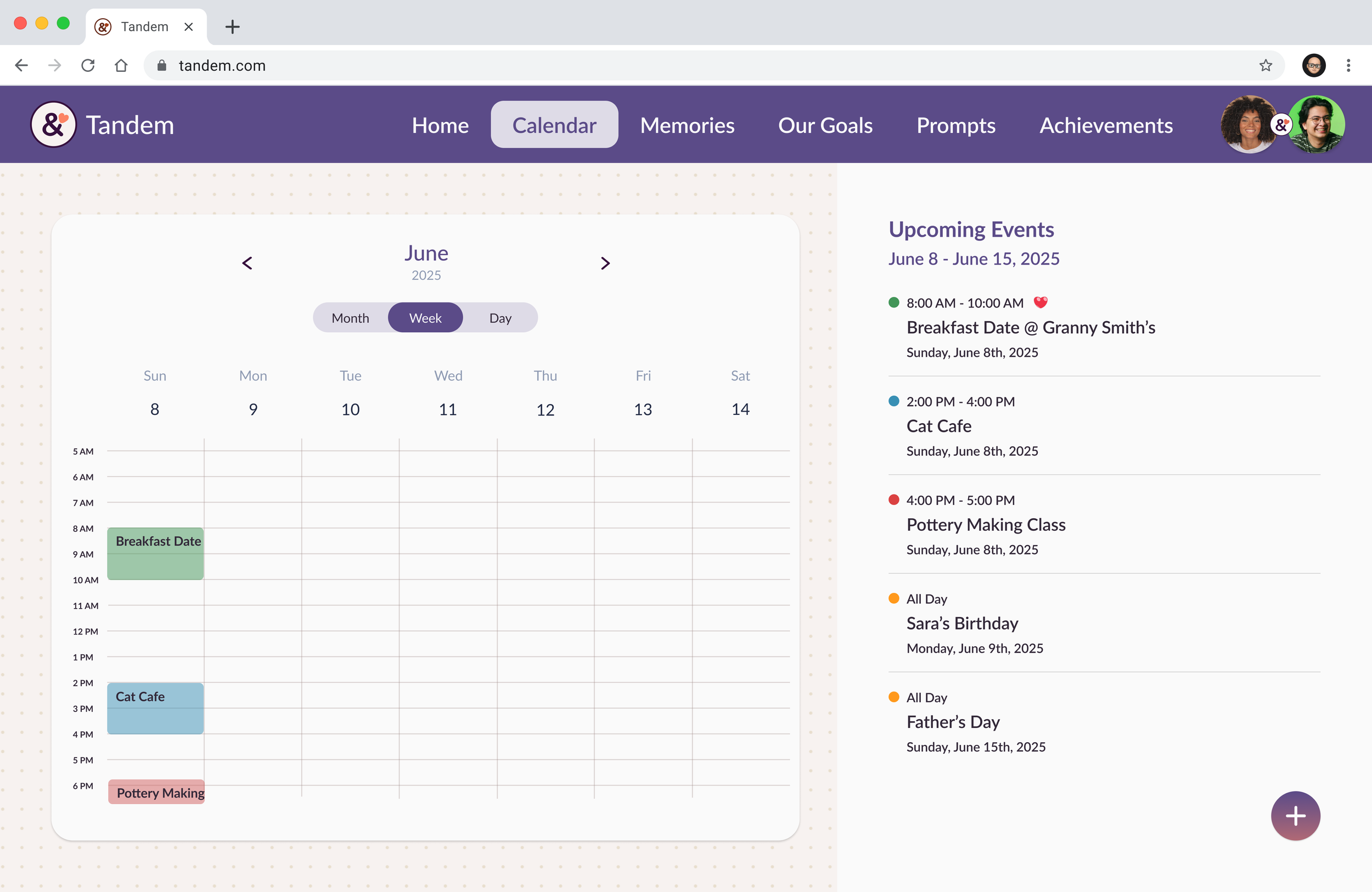
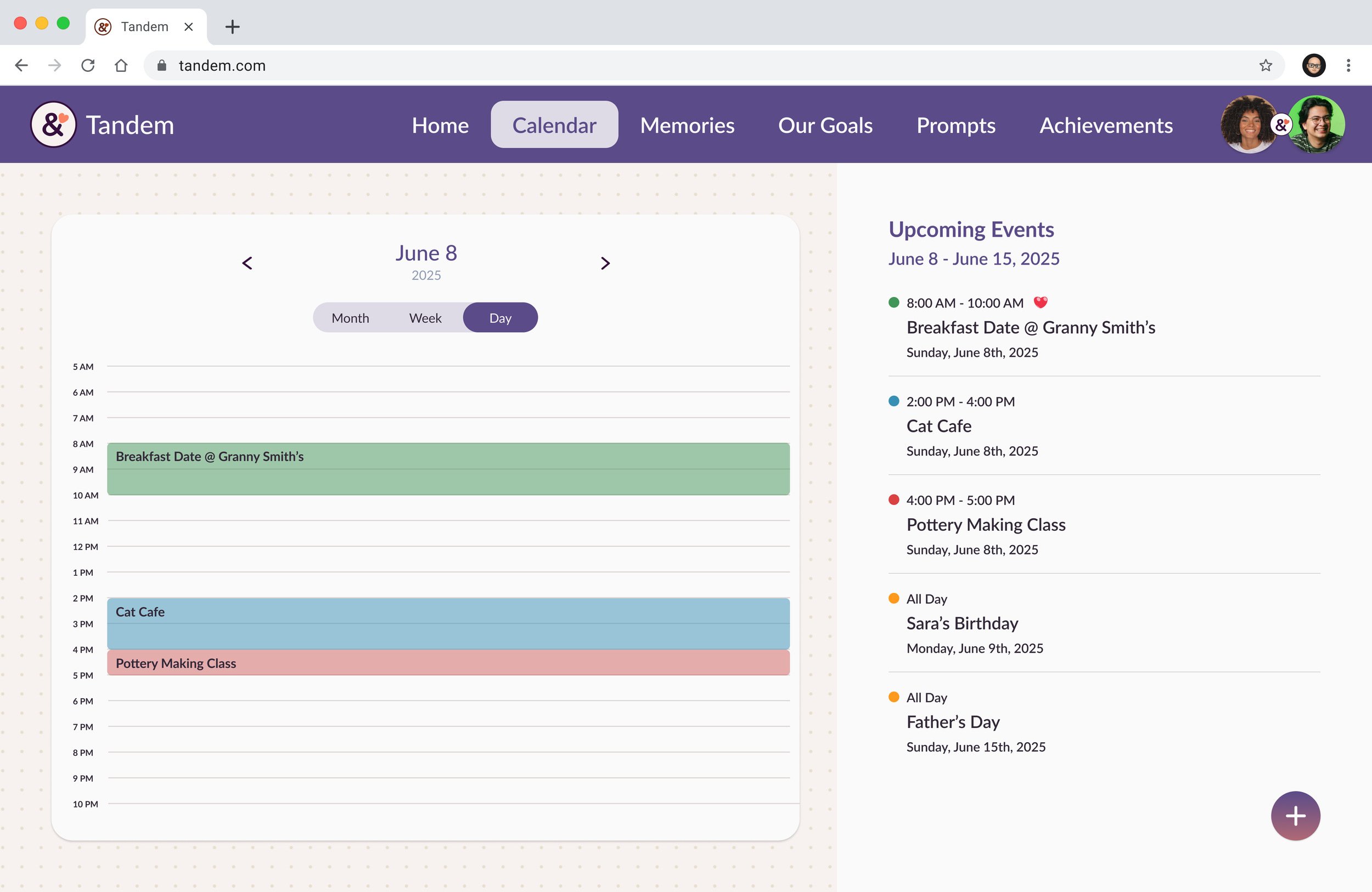
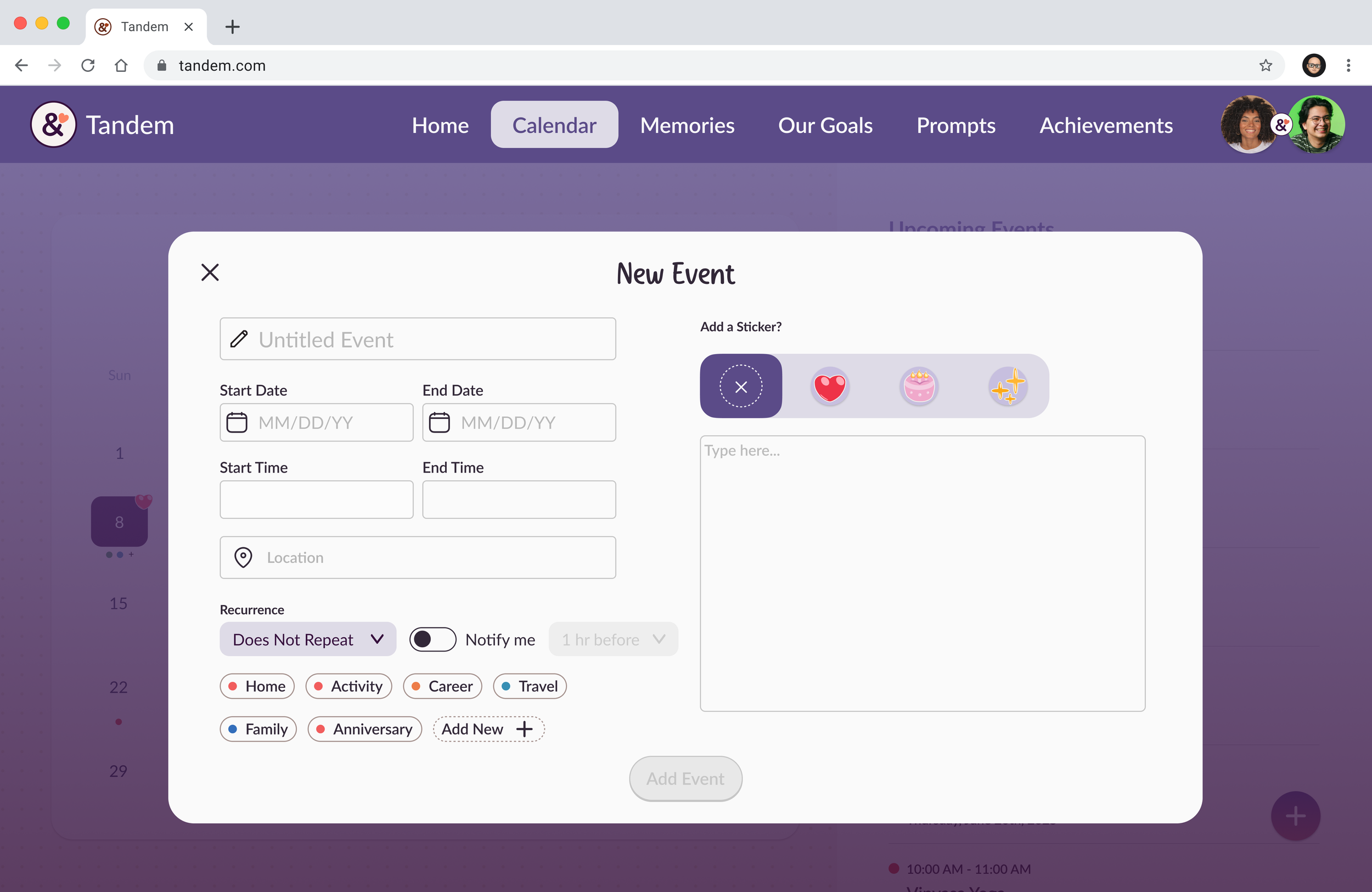
Memories
-
![]()
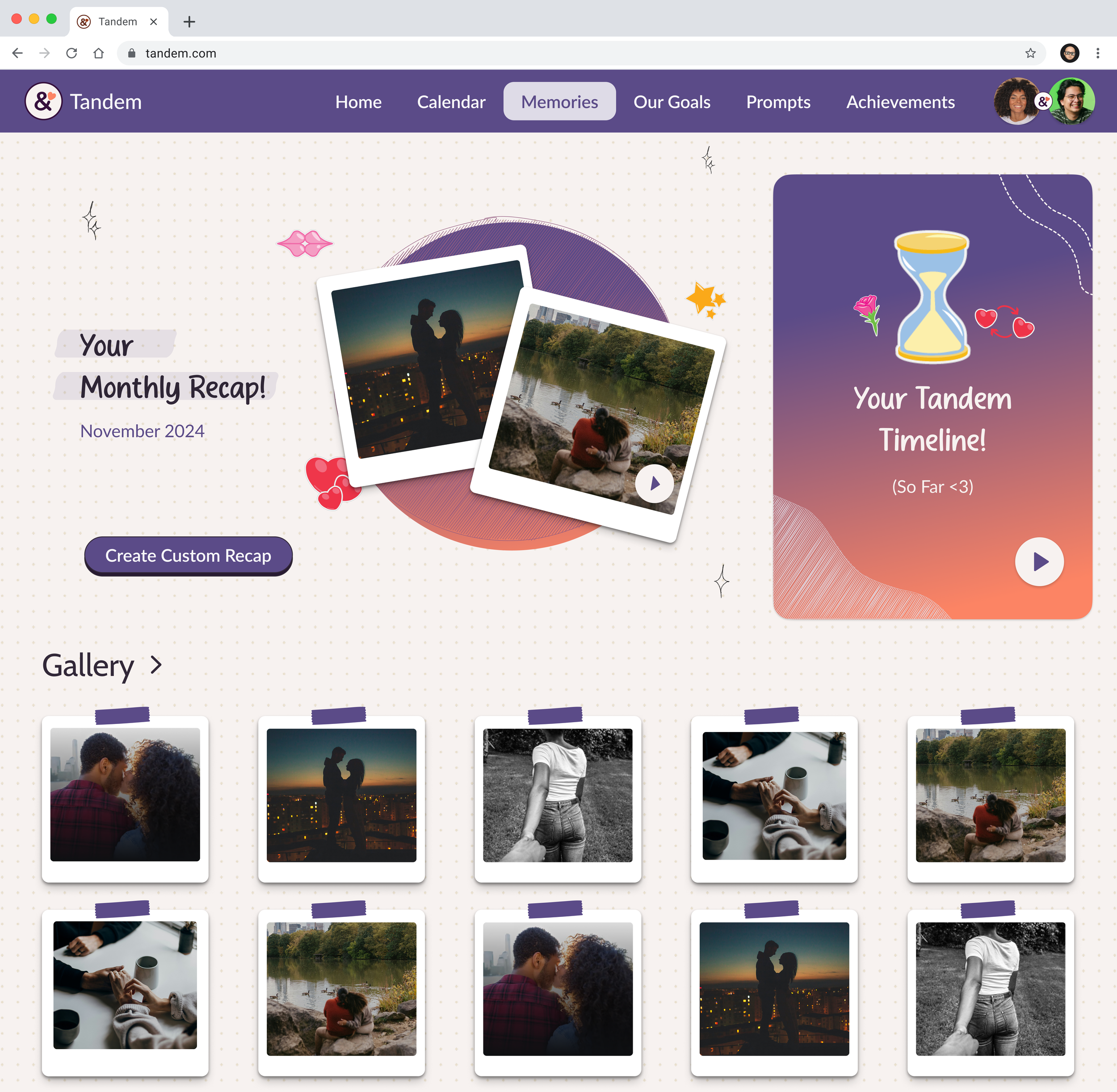
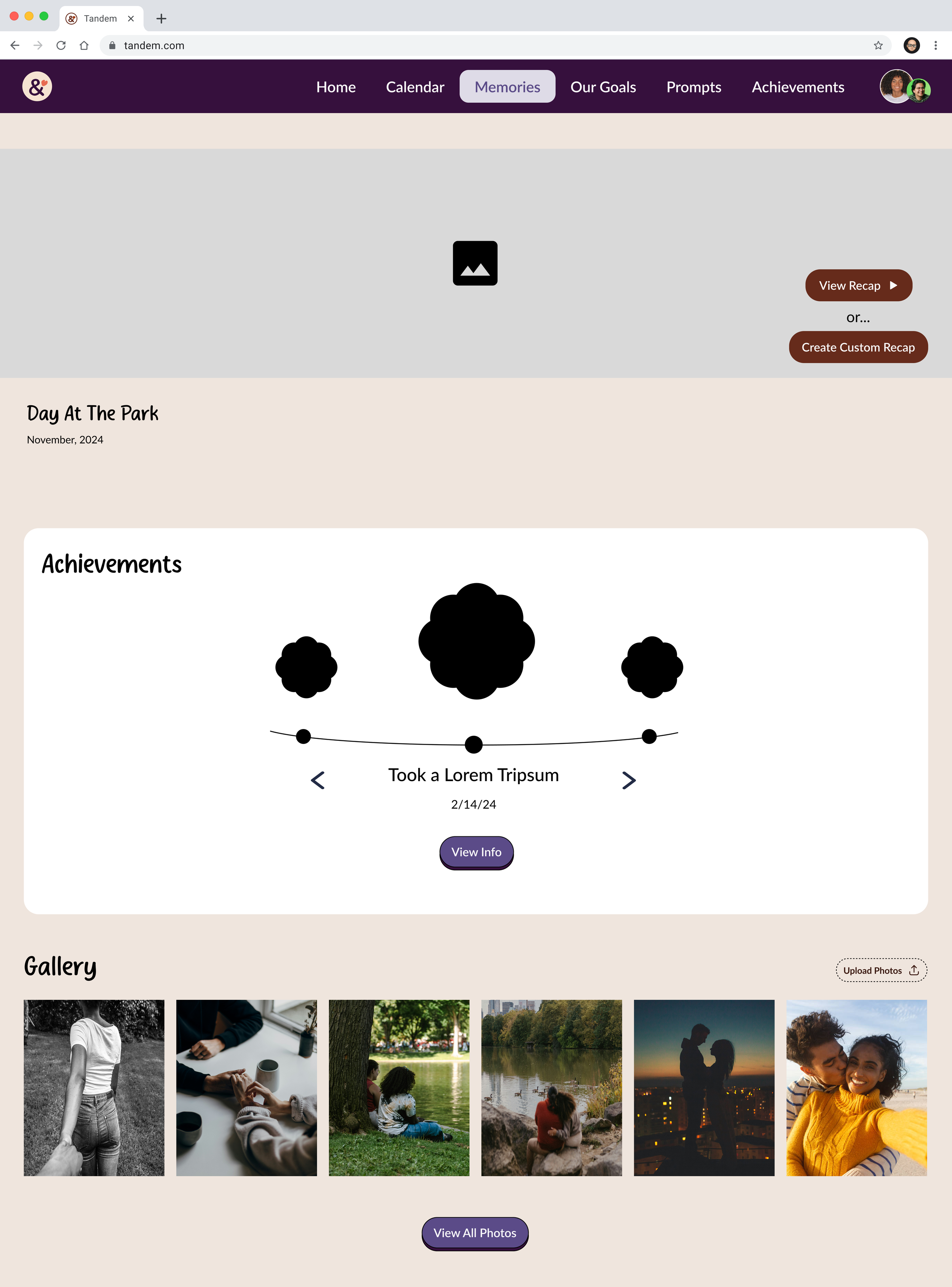
Memories
-
![]()
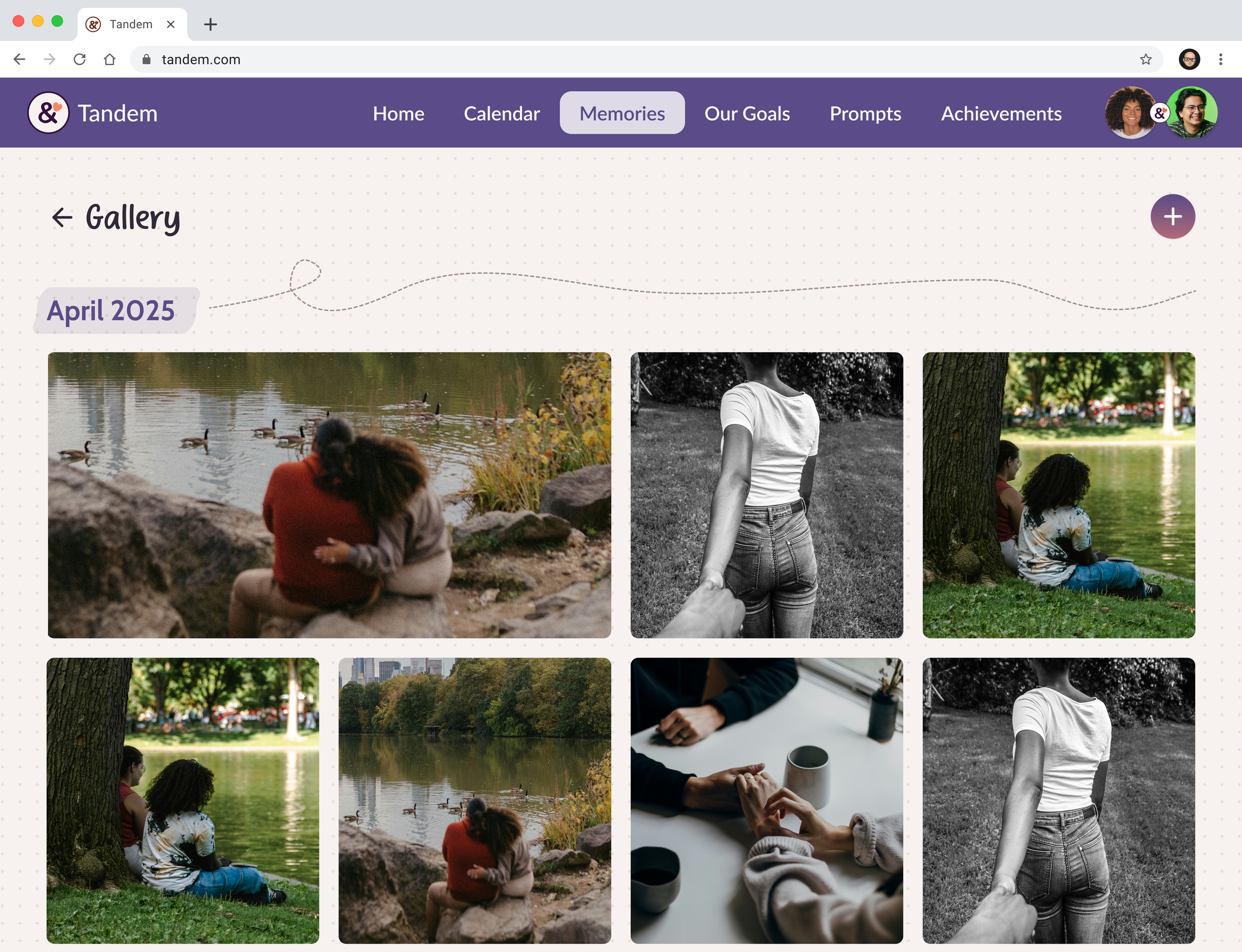
Gallery
-
![]()
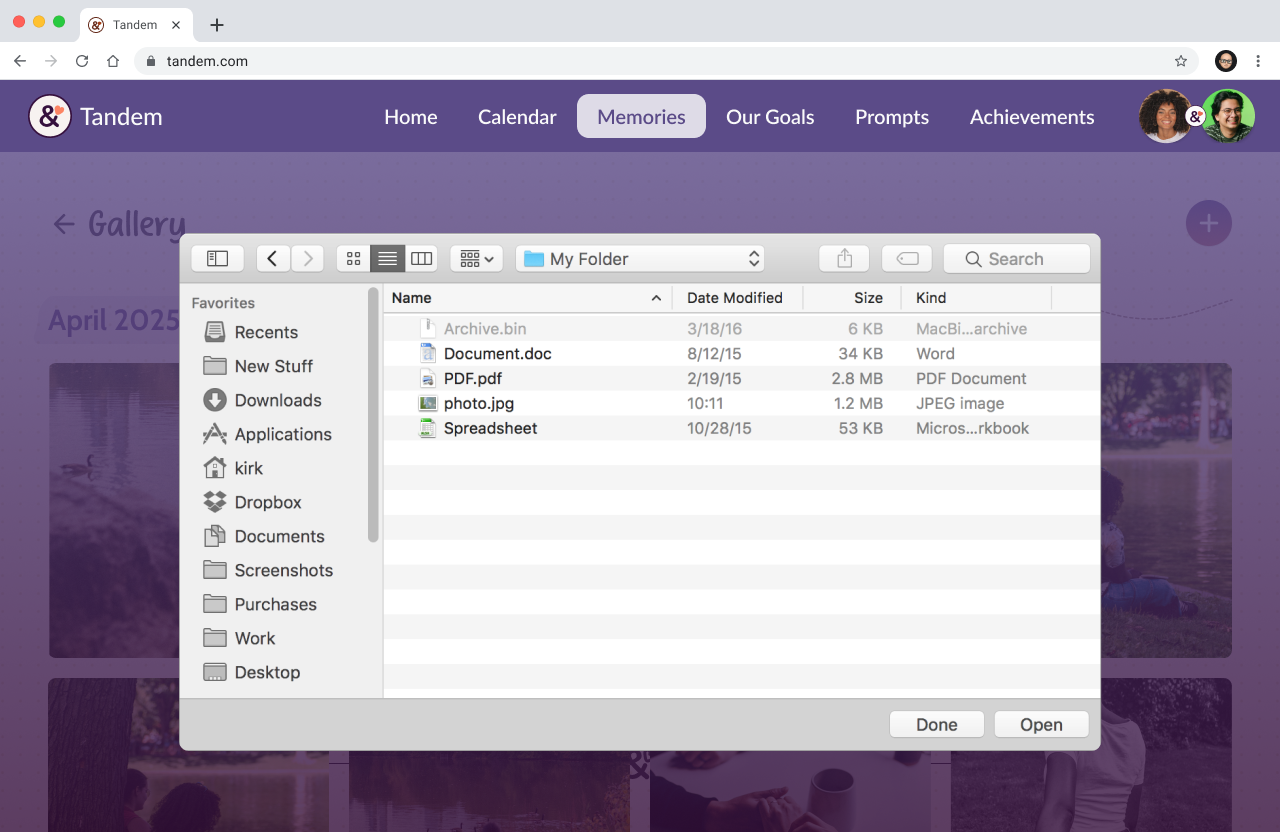
Adding Images to Gallery
-
![]()
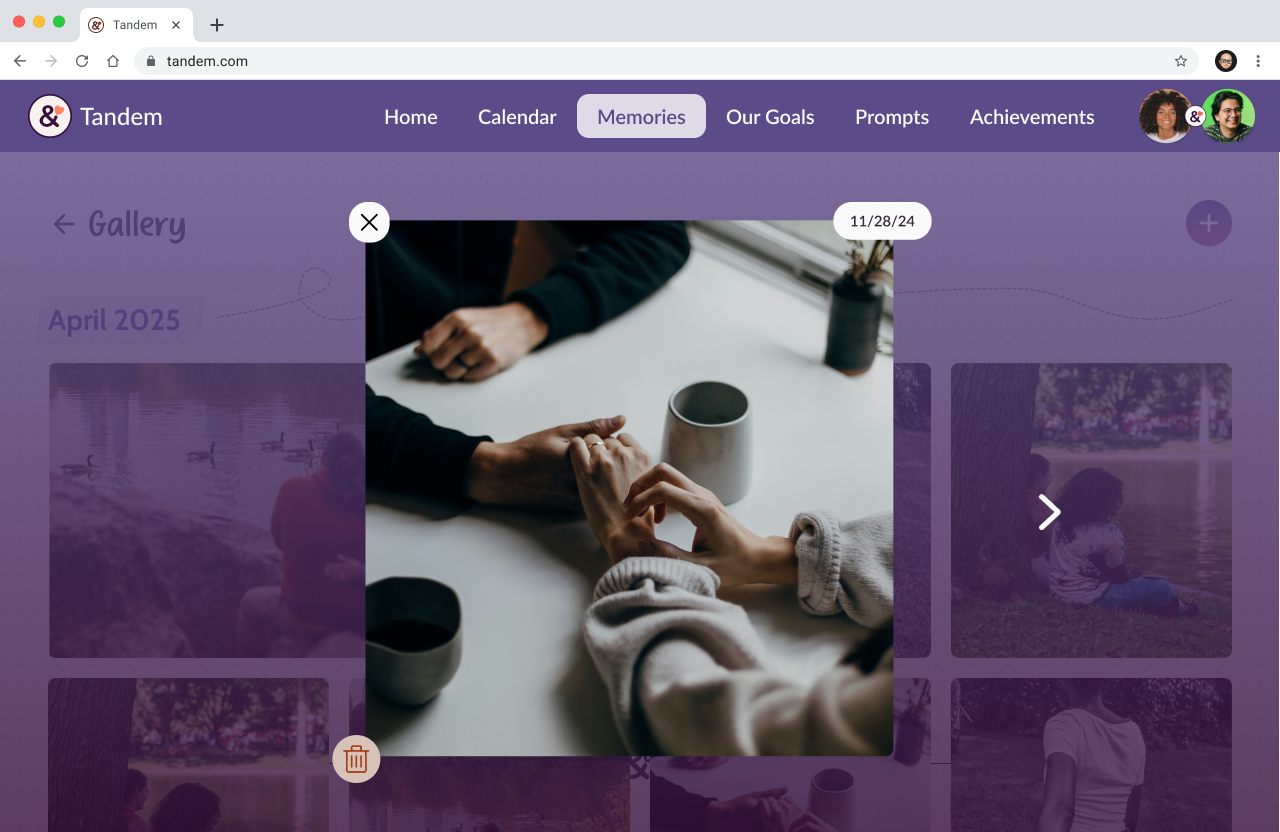
Individual Image
-
![]()
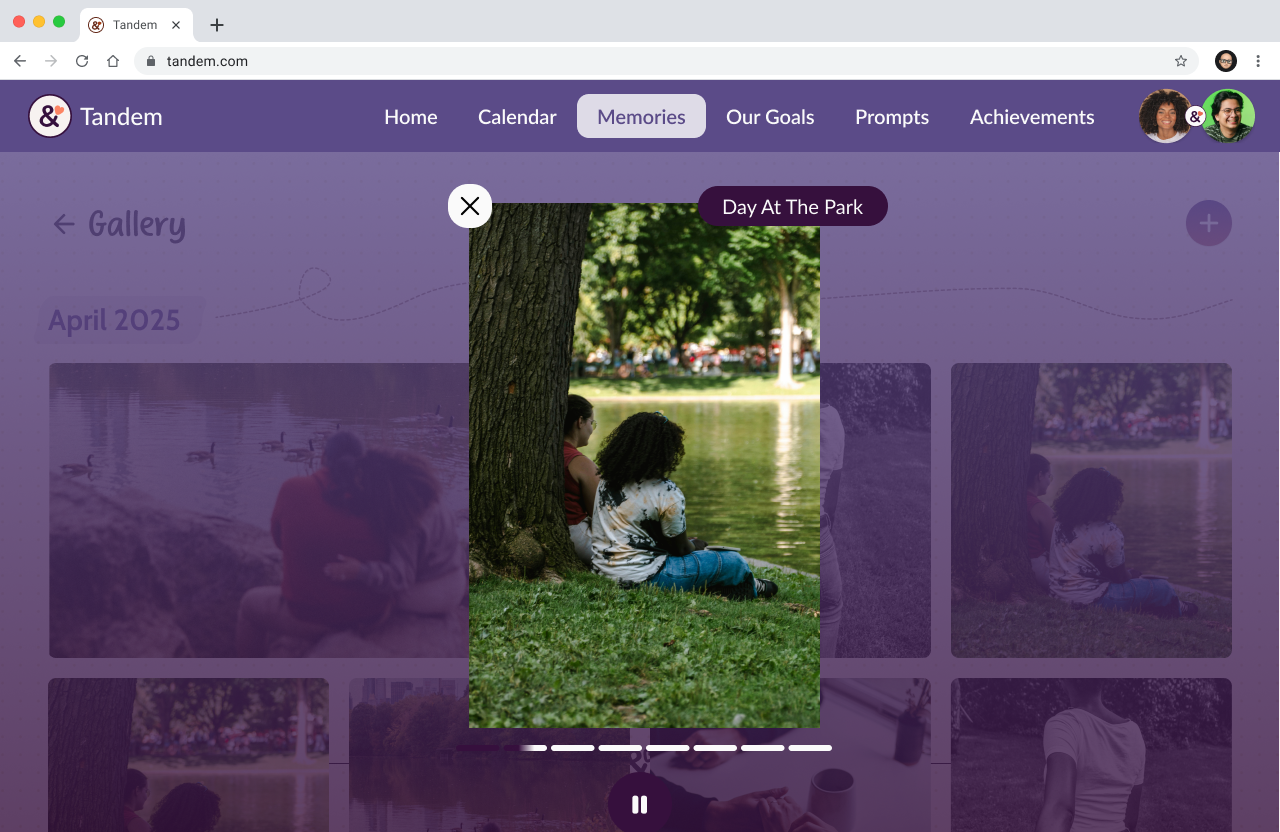
Recap
-
![]()
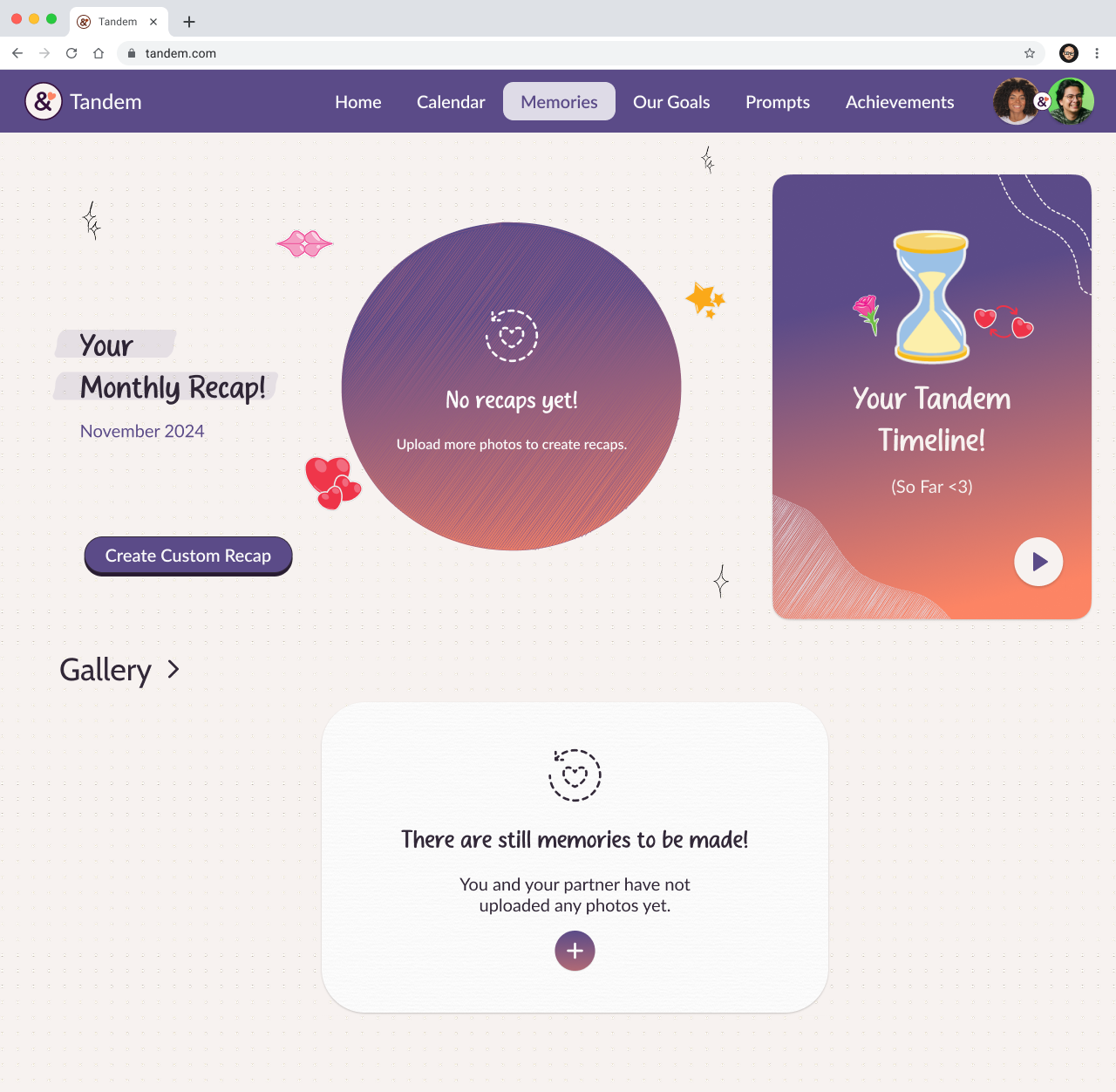
Memories - Empty State
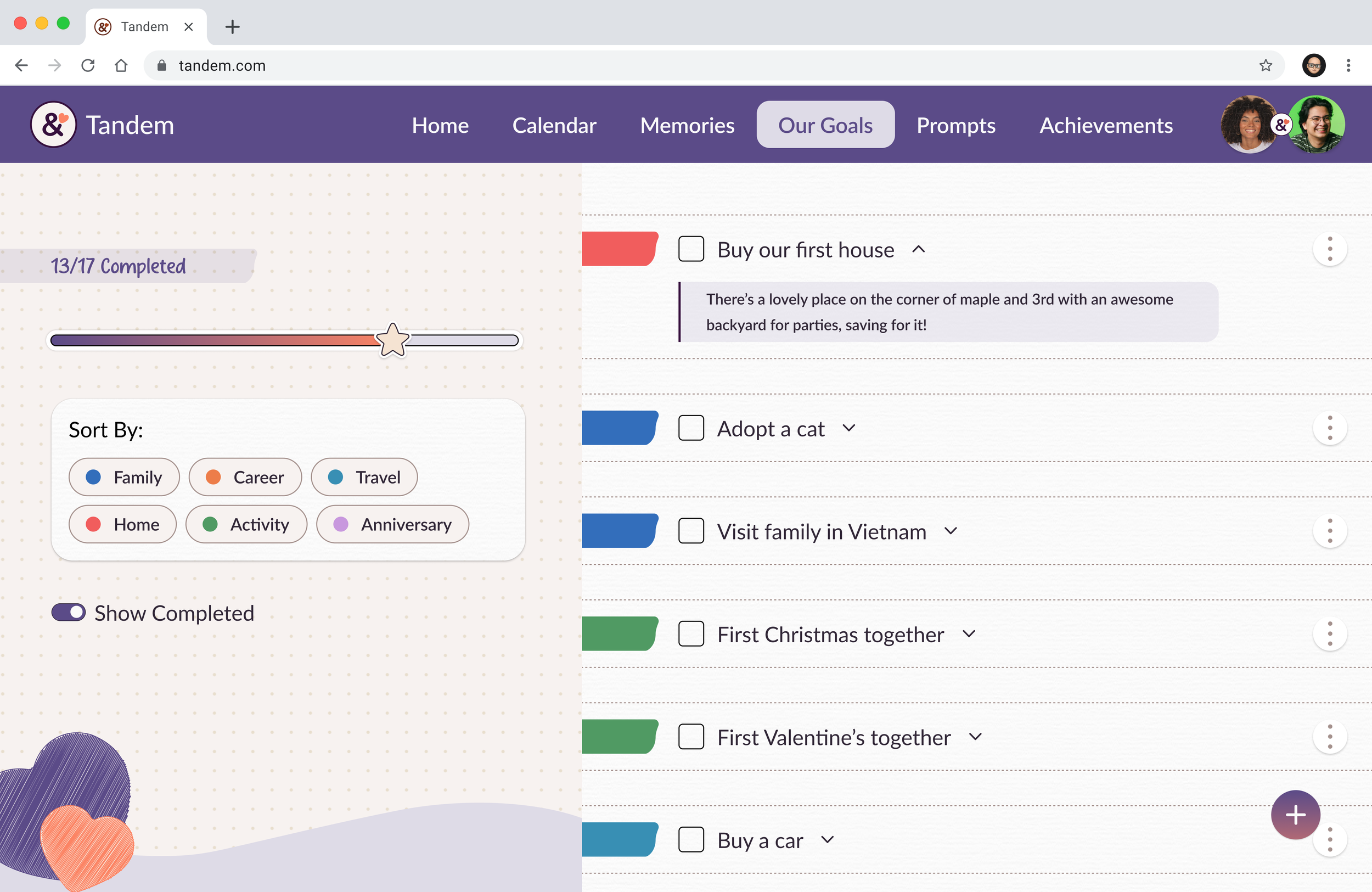
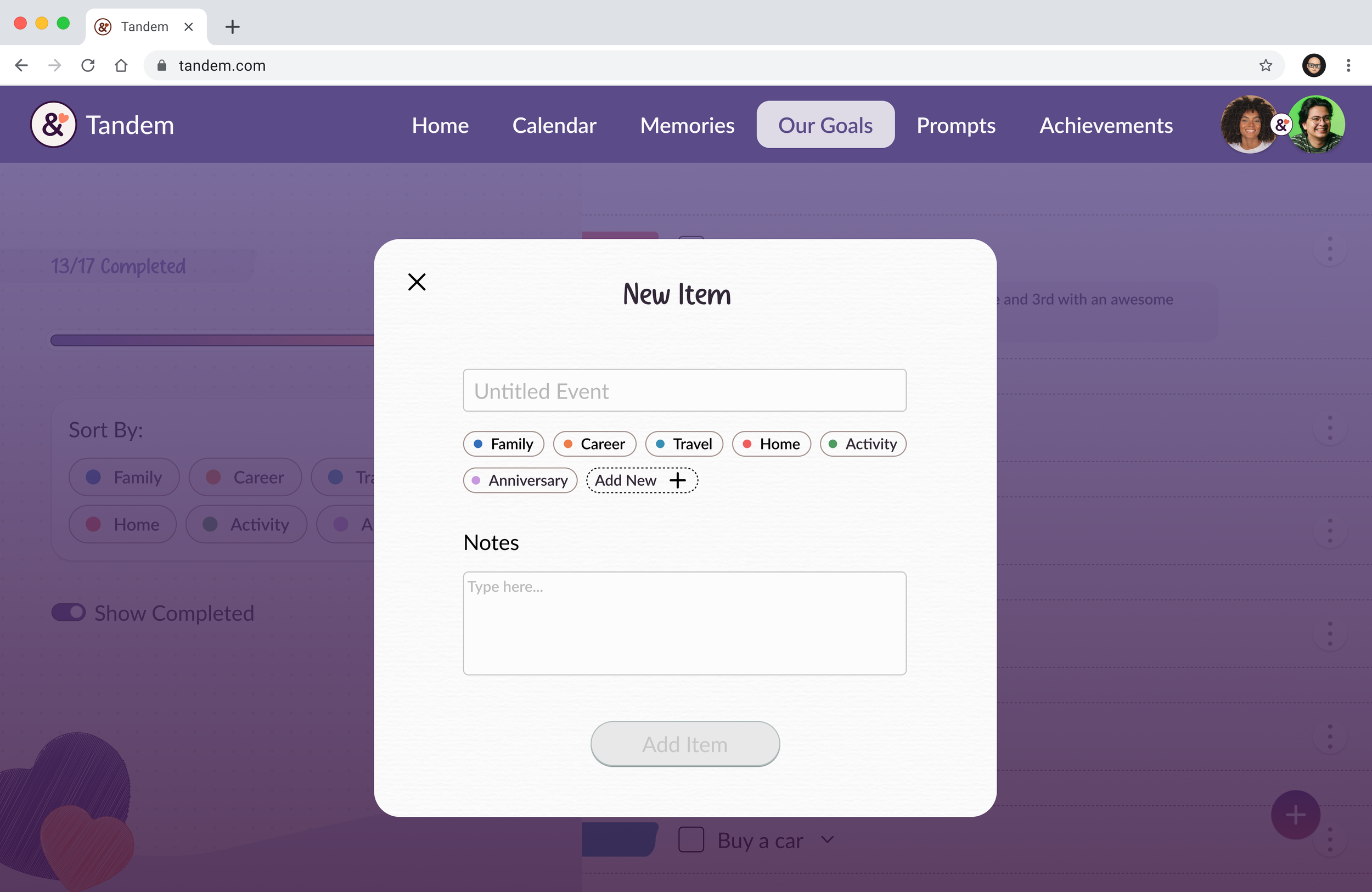
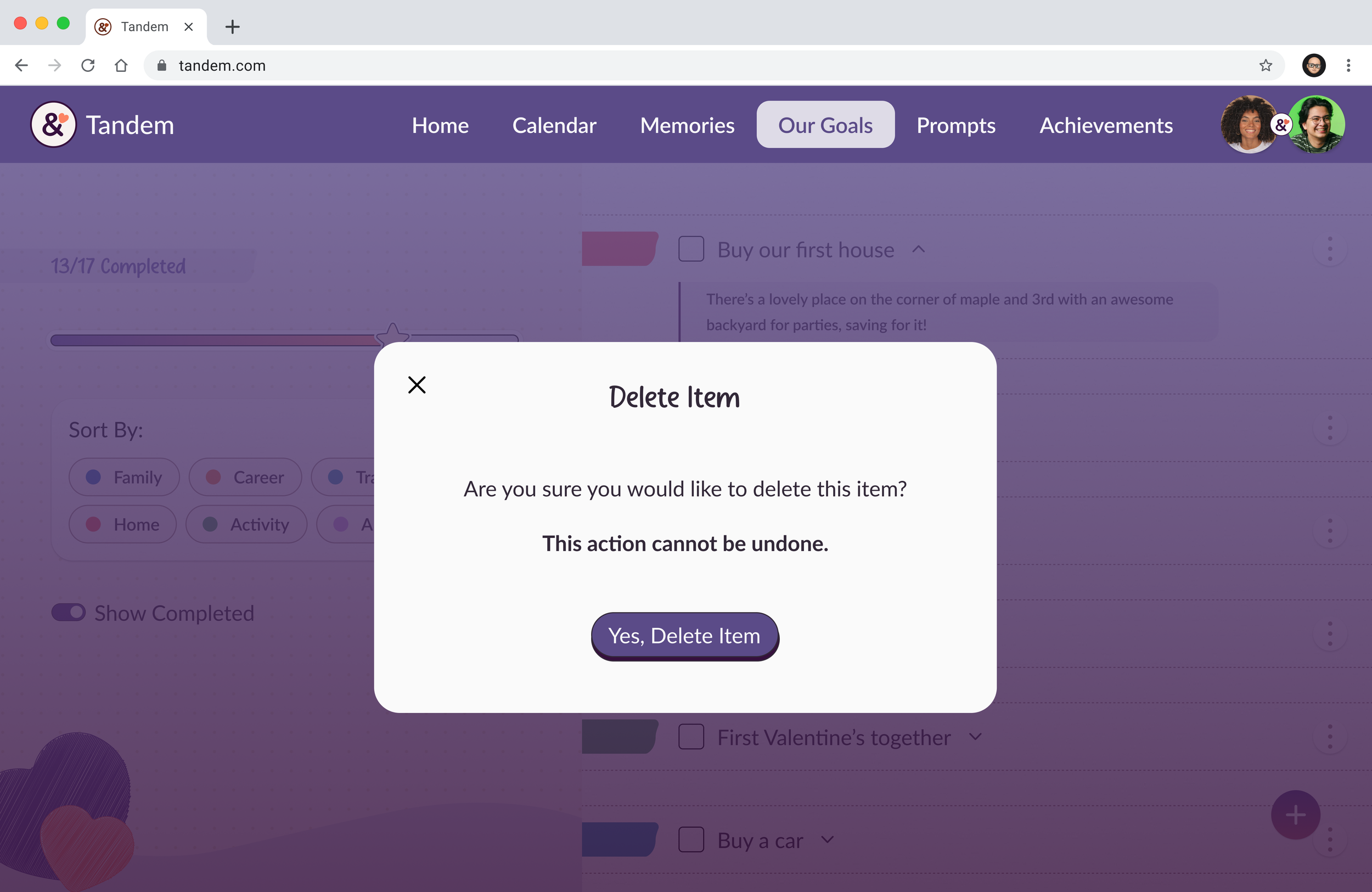
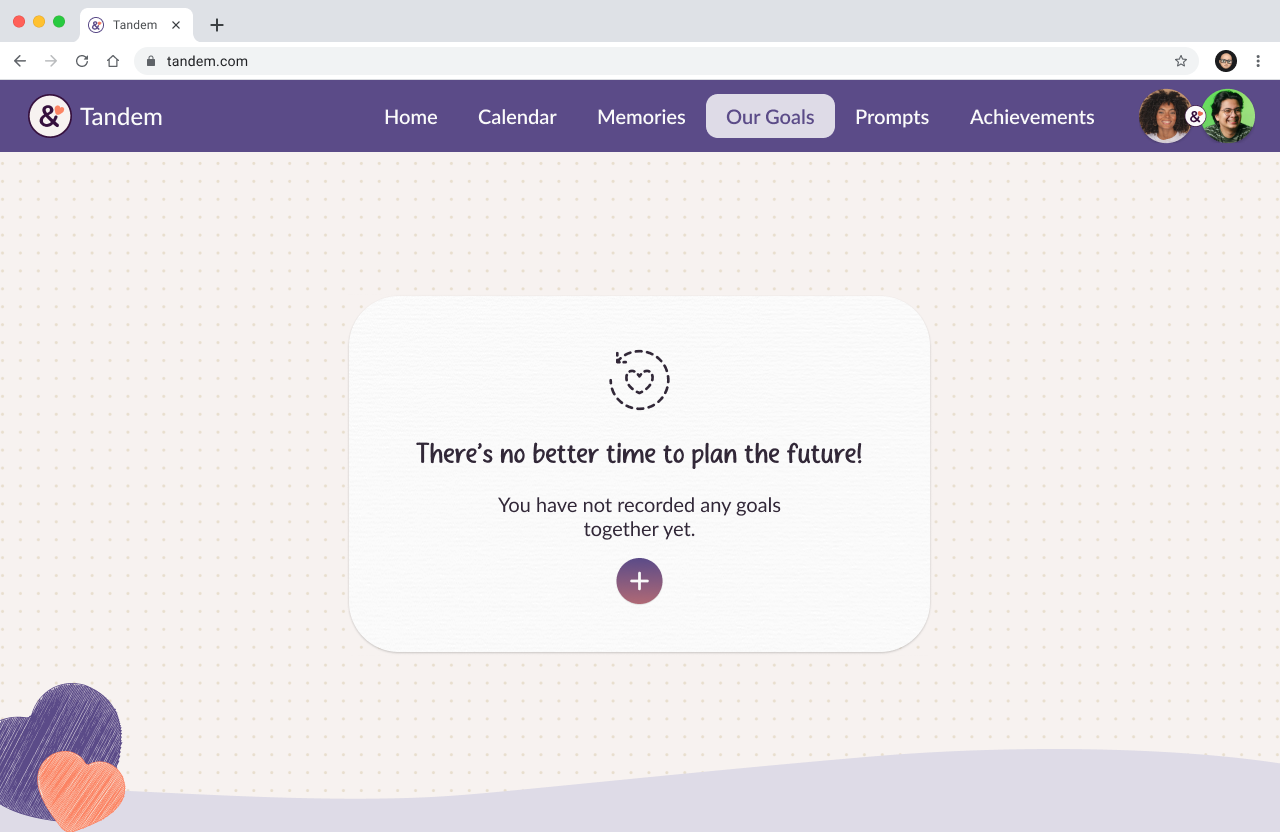
Our Goals
-
![]()
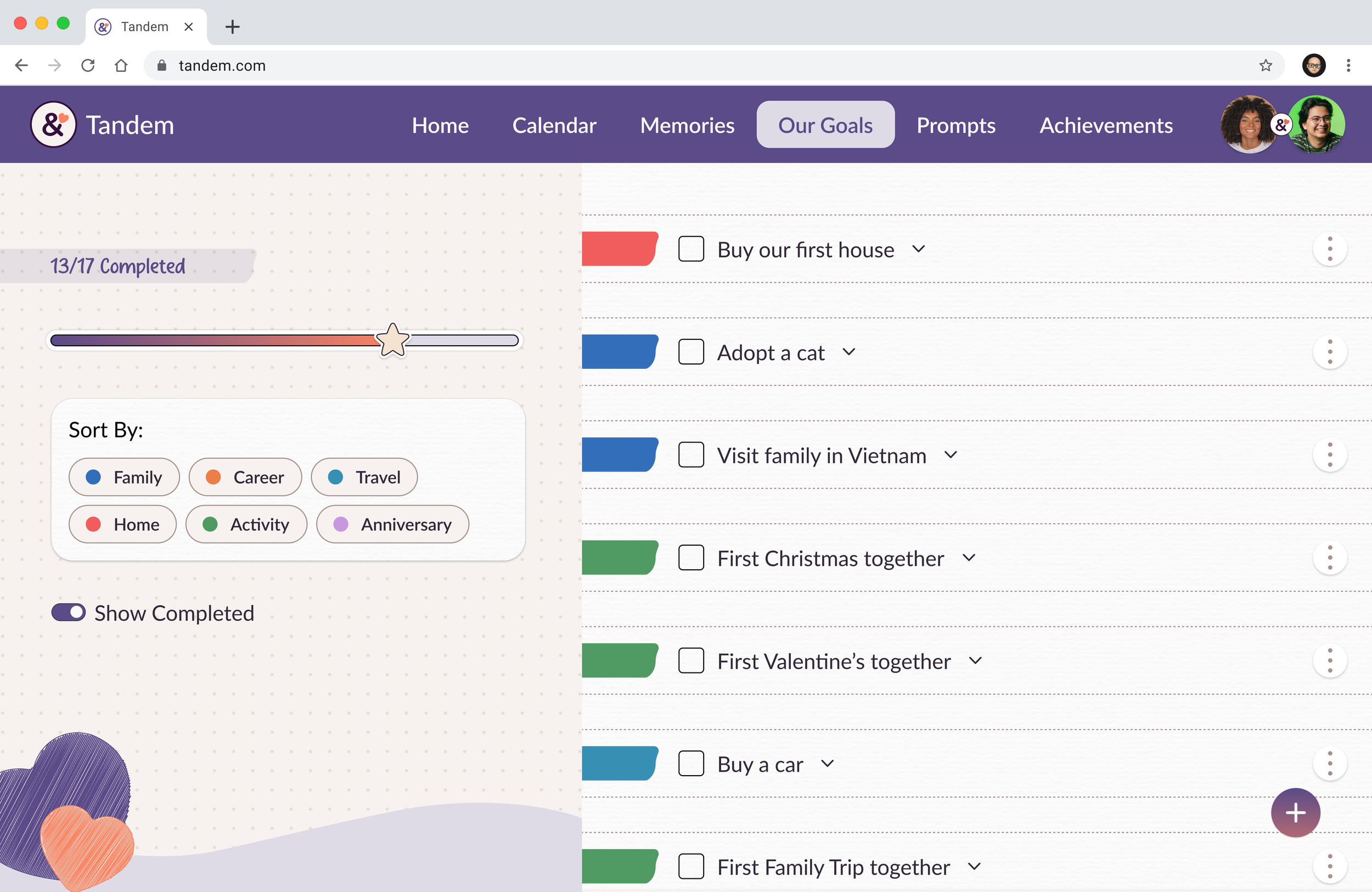
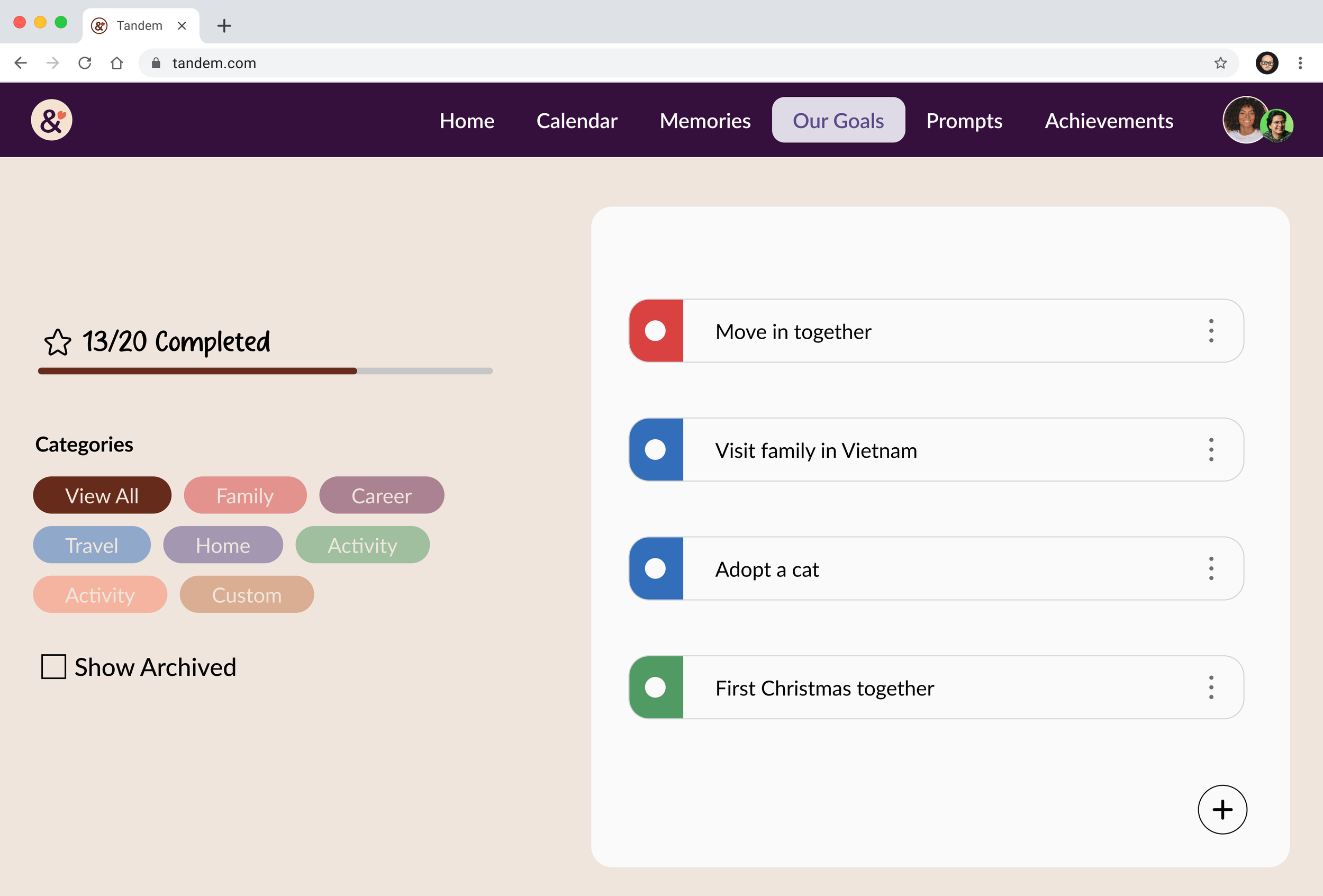
Our Goals
-
![]()
Our Goals - Expanded
-
![]()
New Goal
-
![]()
Delete Goal
-
![]()
Our Goals - Empty State
Prompts
-
![]()
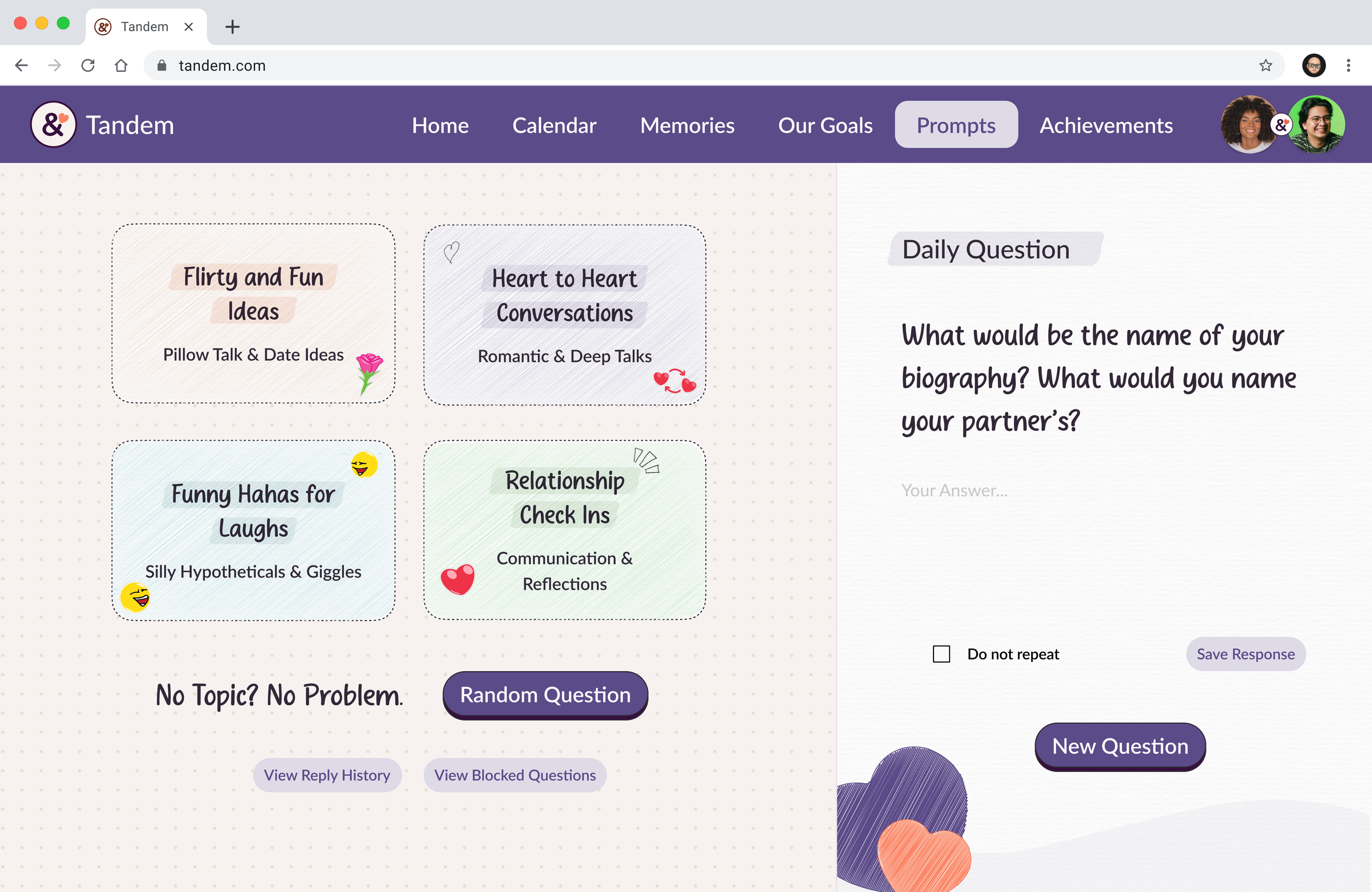
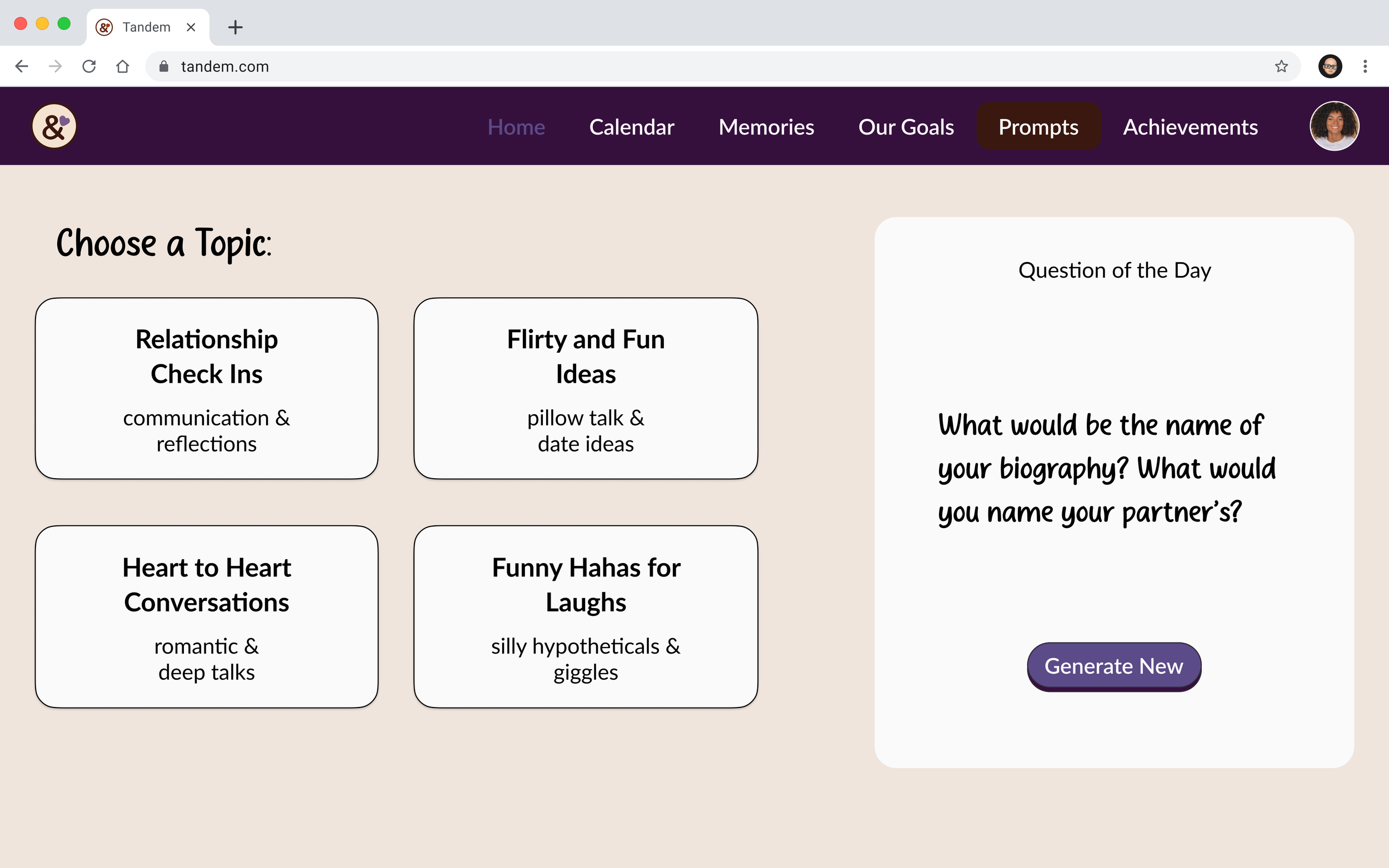
Prompts
-
![]()
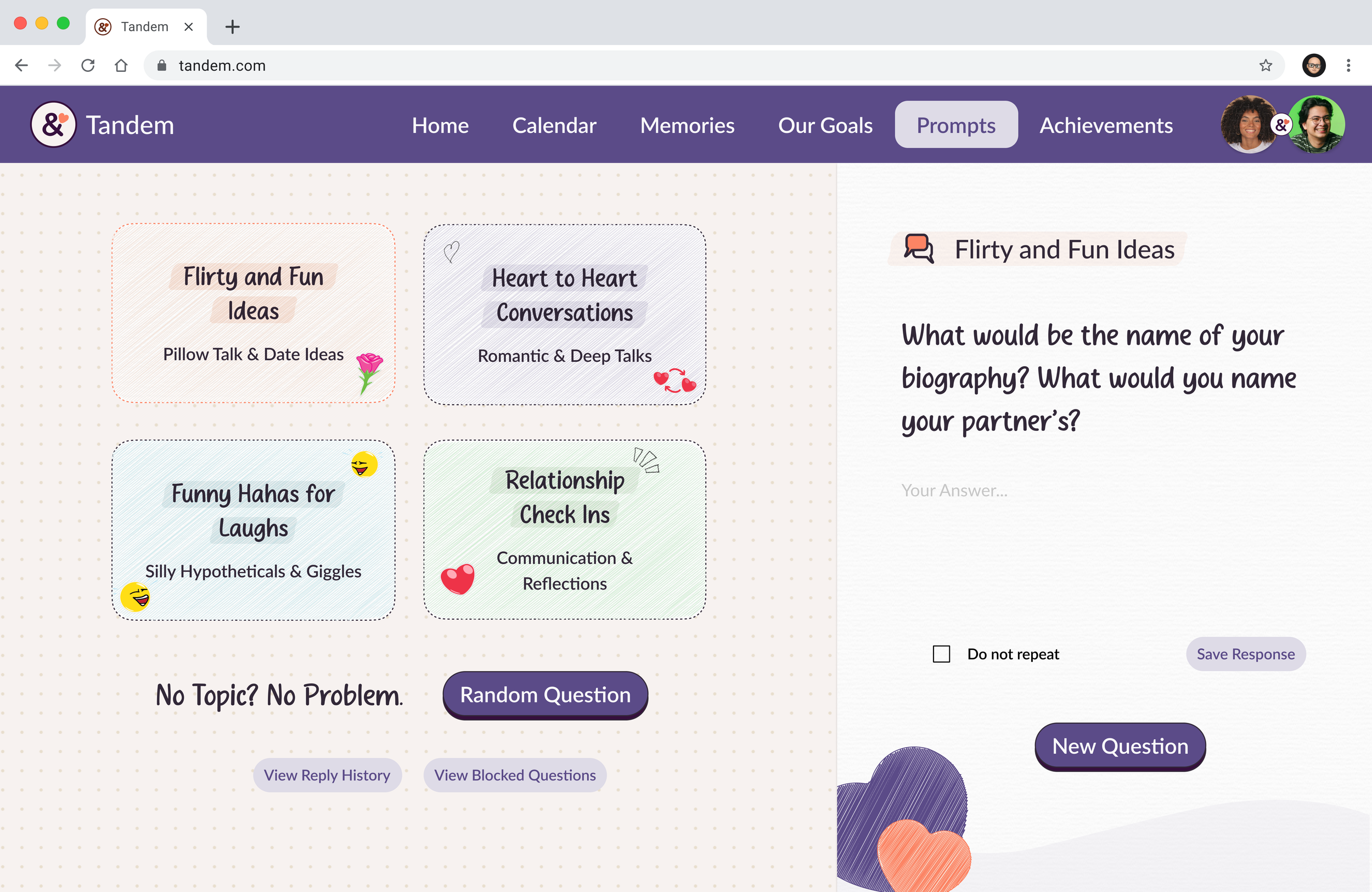
Selected Category
-
![]()
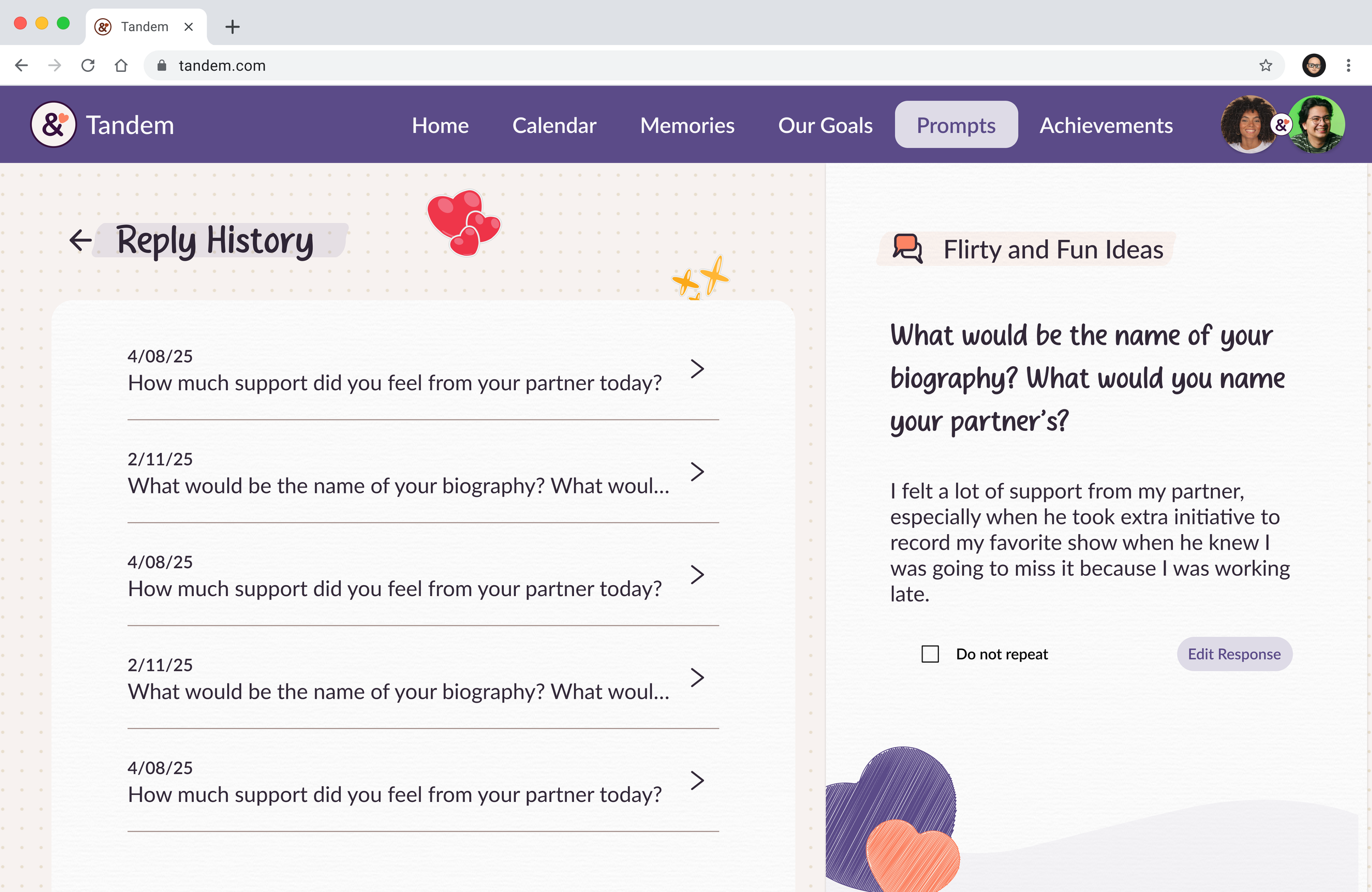
Reply History
-
![]()
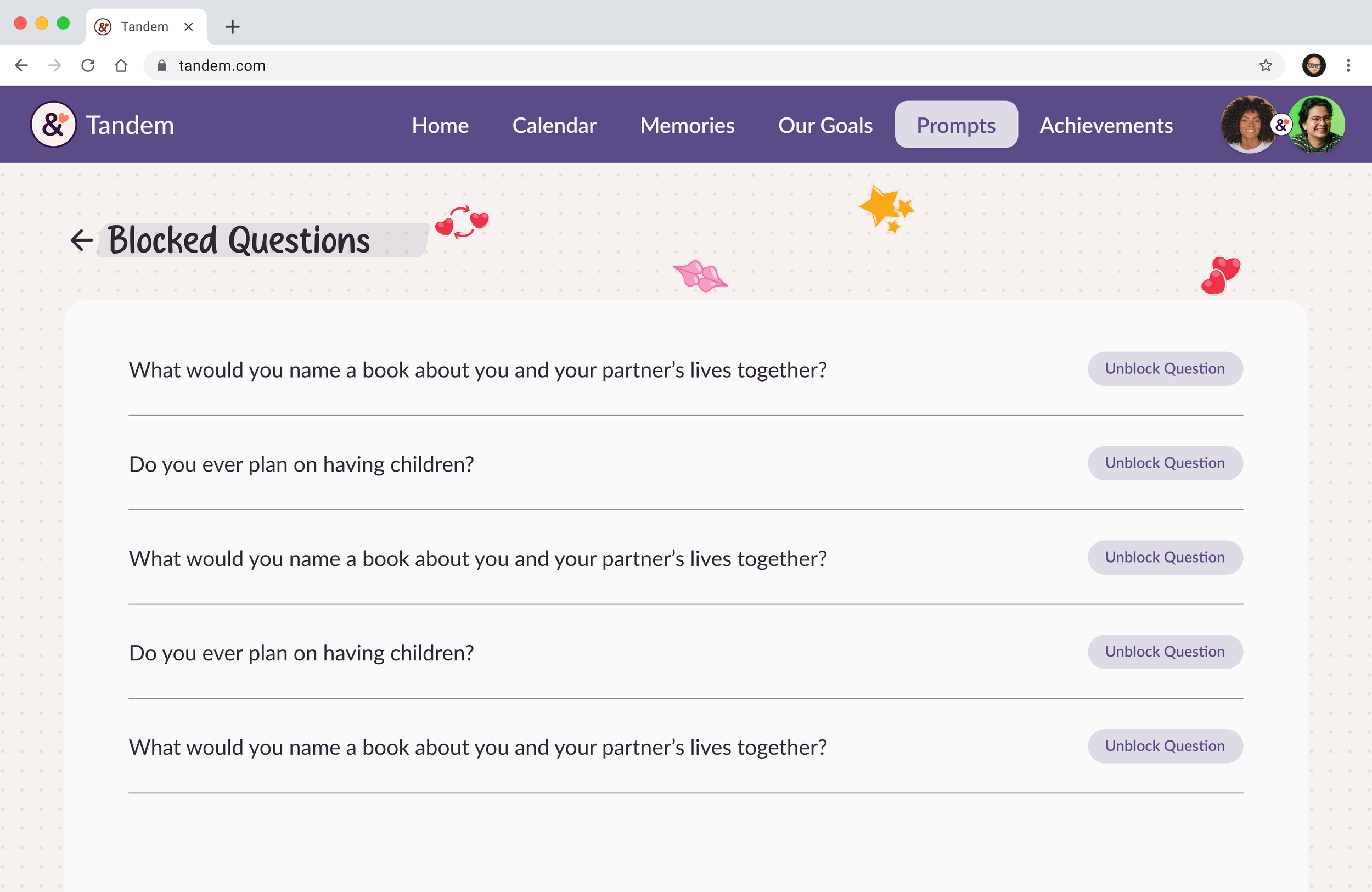
Blocked Questions
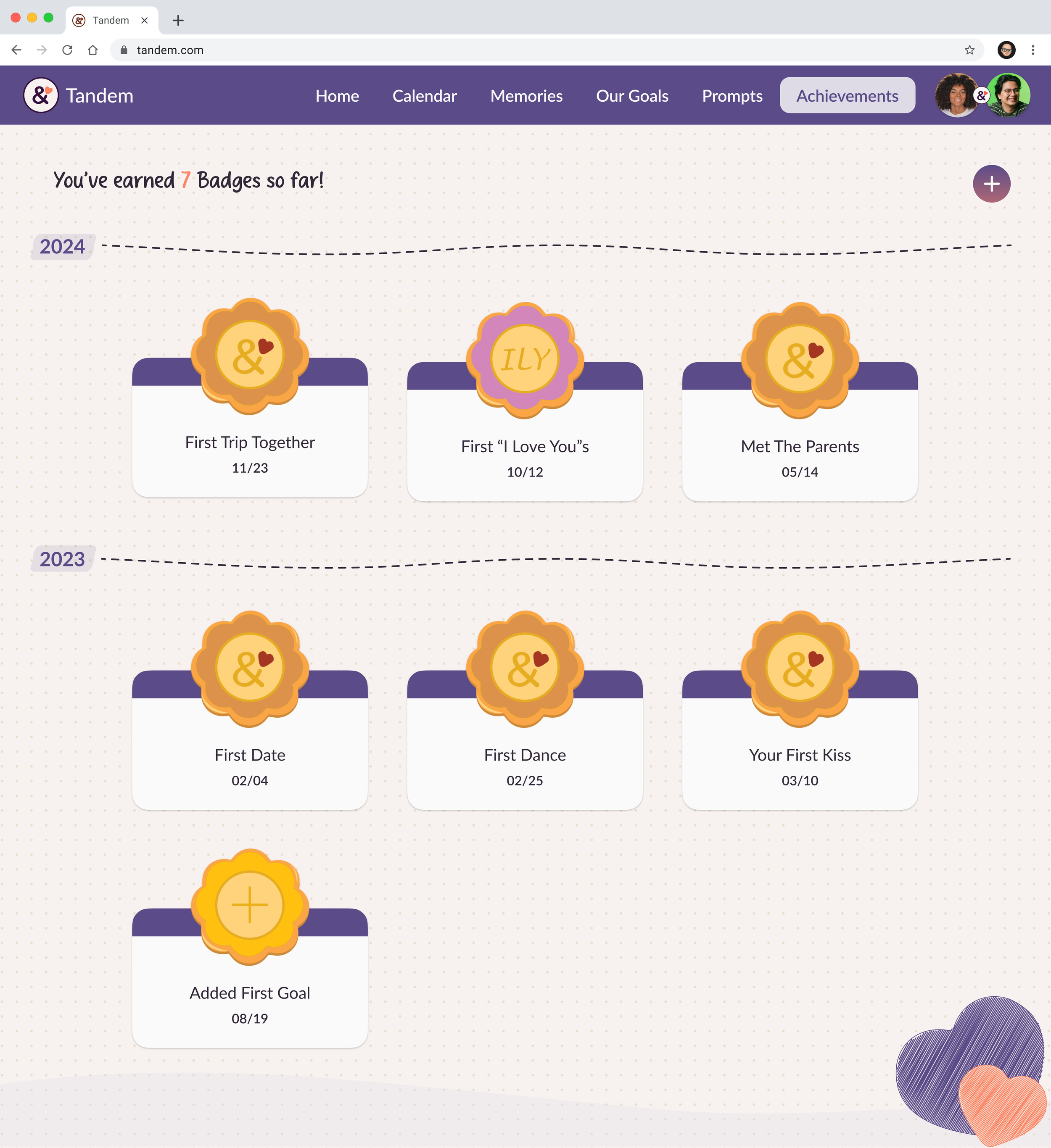
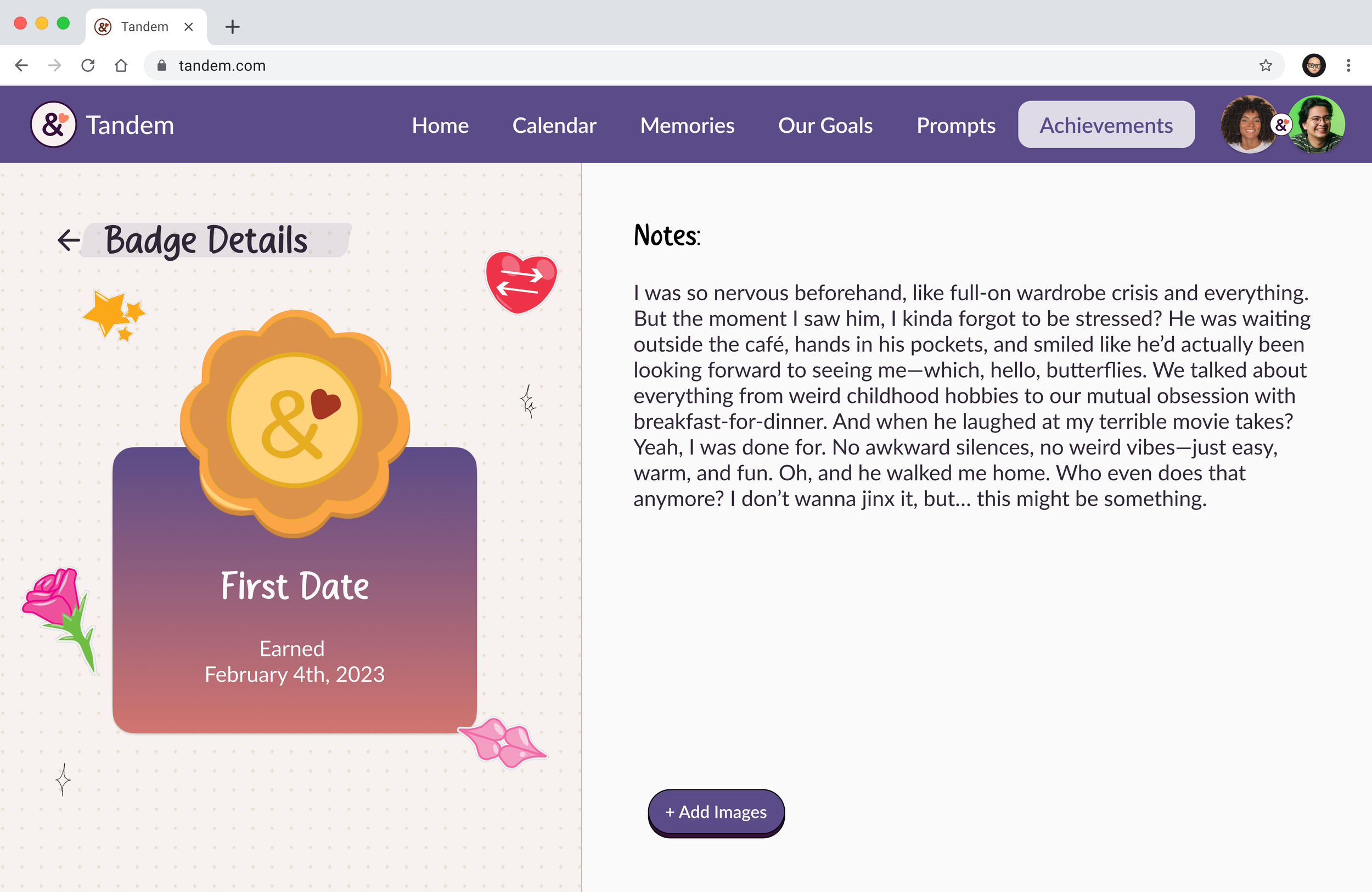
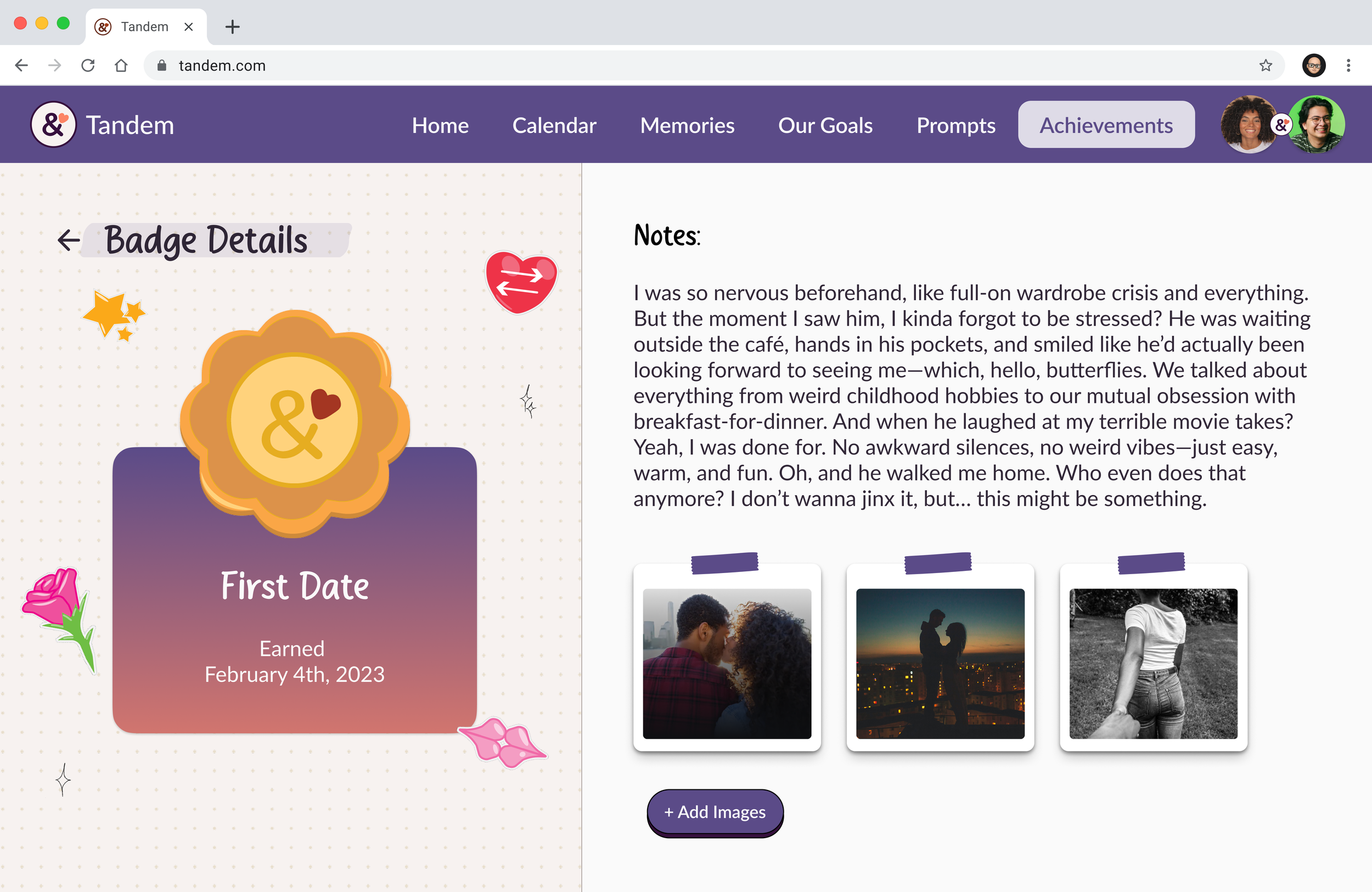
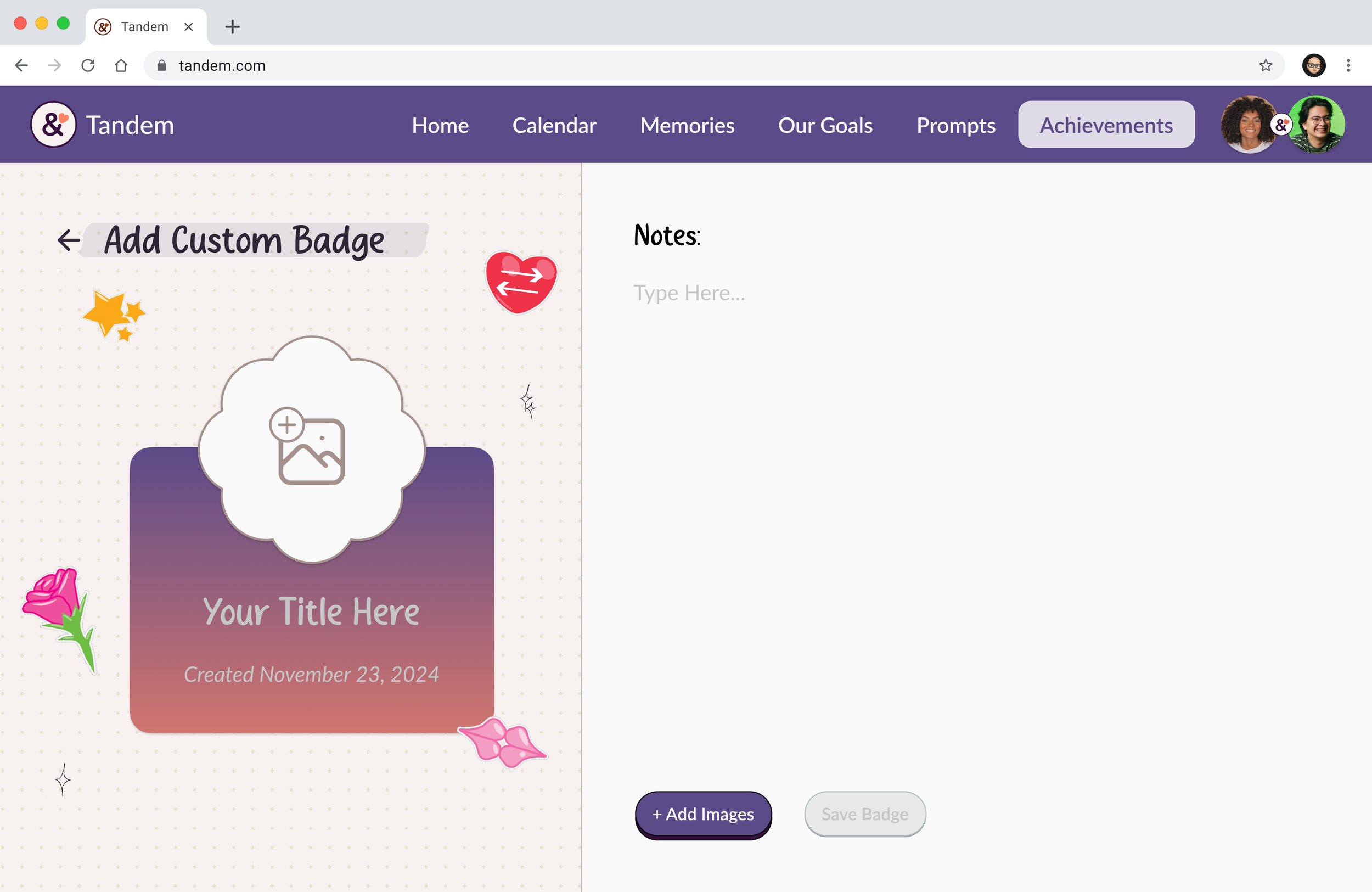
Achievements
-
![]()
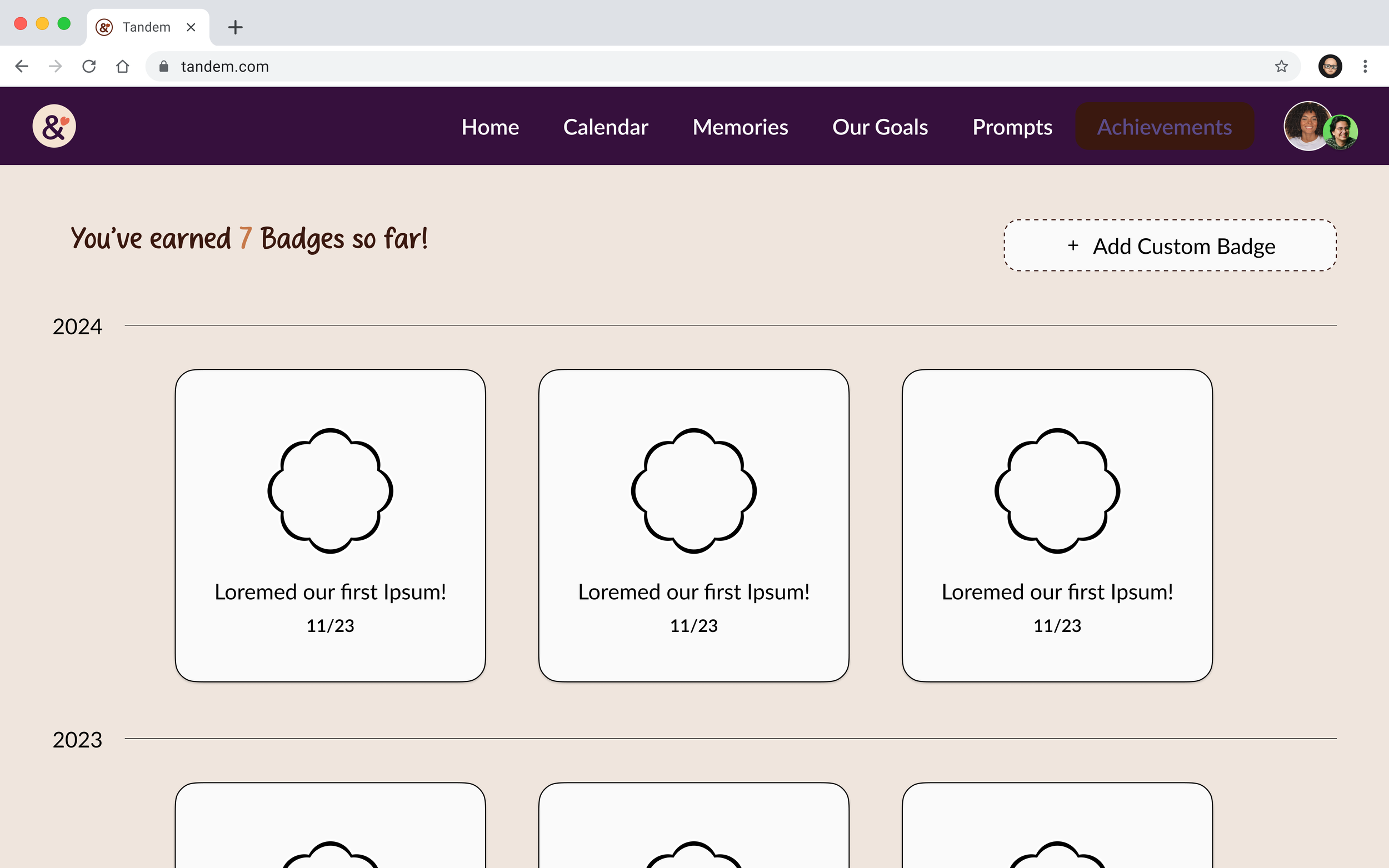
Achievements
-
![]()
Badge Details
-
![]()
Badge Details - Added Images
-
![]()
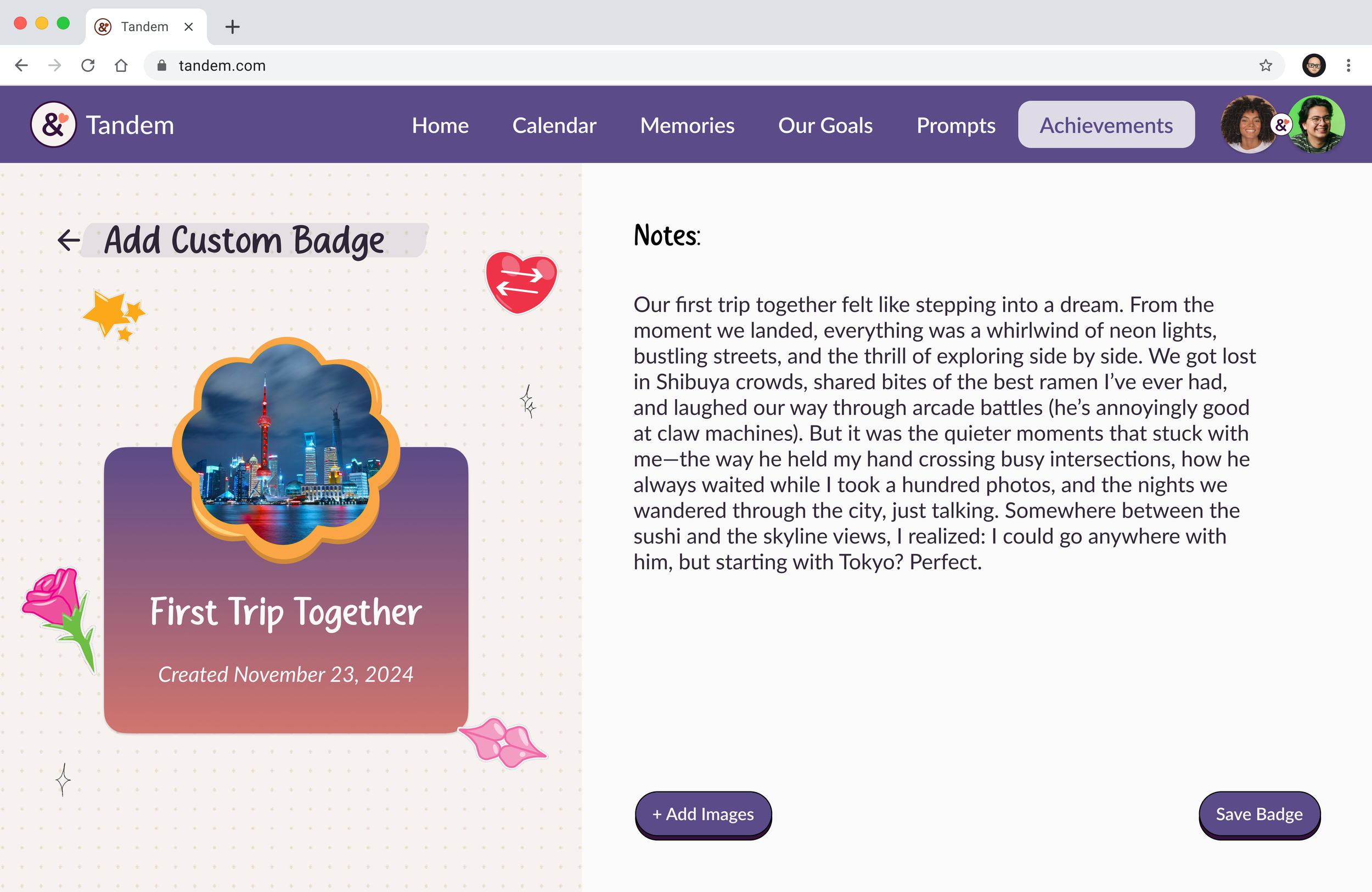
Add Custom Badge
-
![]()
Filled Custom Badge
Research & Key Insights
Our research process spanned surveys, interviews, usability tests, behavioral studies, and diary studies conducted throughout all three academic terms.
Early research focused on understanding how couples interact with relationship-centered technology and what emotional needs were not being addressed by existing products.
Key Findings:
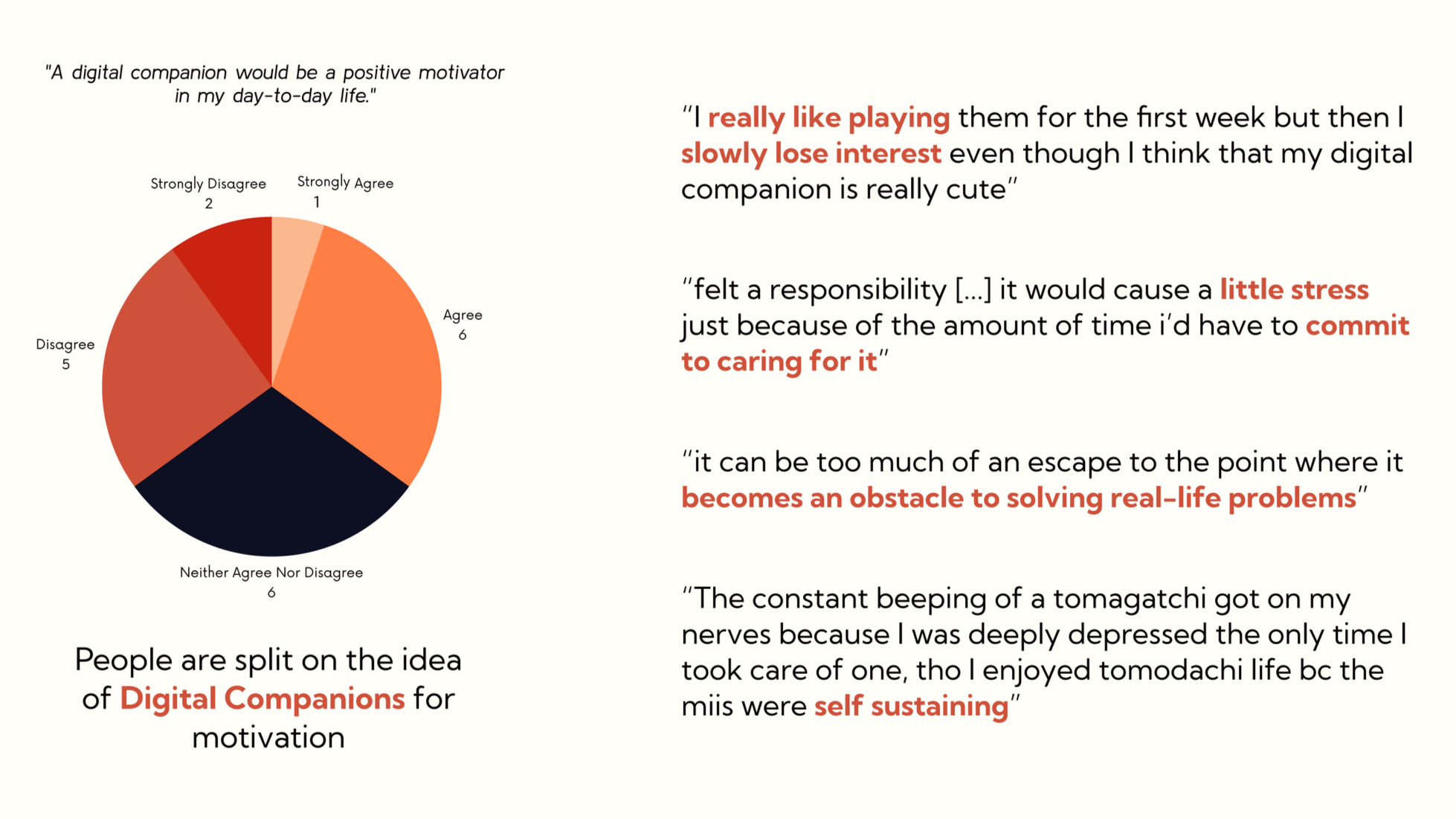
Many participants had previous experience with digital pets or virtual companions
Most participants enjoyed those experiences initially, but eventually described them as repetitive or burdensome
Many users expressed that relationship tools often feel performative or demanding over time
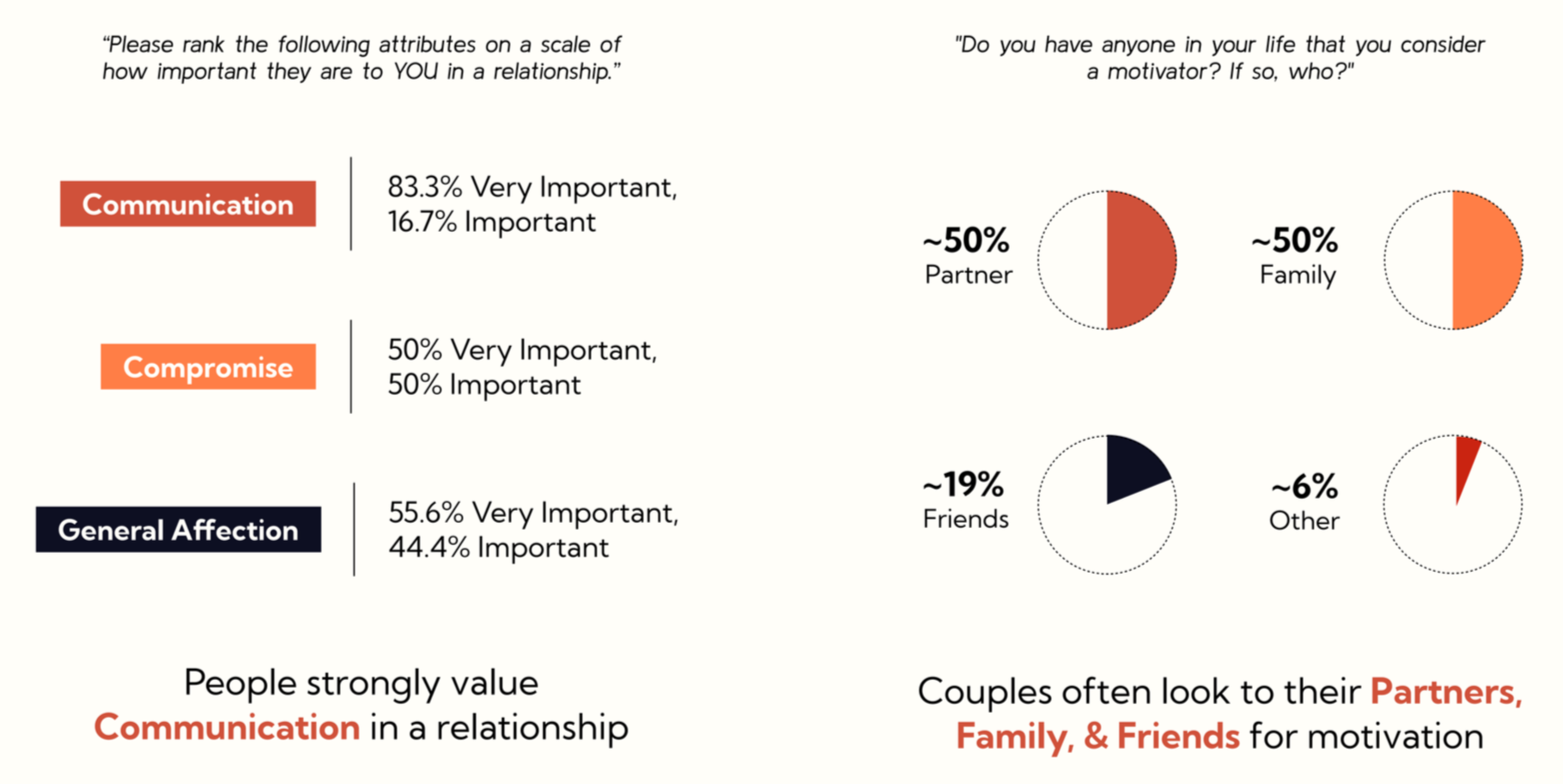
Roughly 50% of participants identified their romantic partner as one of their strongest personal motivators
Couples valued experiences that felt effortless, emotionally meaningful, and naturally integrated into their routines
One of the most important insights was that users were not looking for a product that “managed” their relationship. Instead, they wanted a space that helped them:
Reflect on meaningful memories
Feel emotionally aligned
Celebrate milestones together
Maintain connection amidst busy schedules
This insight directly informed our pivot away from the virtual pet concept and toward a scrapbook-inspired relationship platform centered around emotional reflection and intentional growth.
Pivot
Research prompted a major shift in direction.
We moved away from designing a fantasy-based companion and instead focused on building a shared relationship environment that felt natural, lightweight, and emotionally meaningful.
This pivot changed both the product vision and design goals.
Instead of asking:
How do we give couples something to take care of?
We asked:
How do we help couples care for each other more intentionally?
That shift became the foundation of Tandem.
Design Process
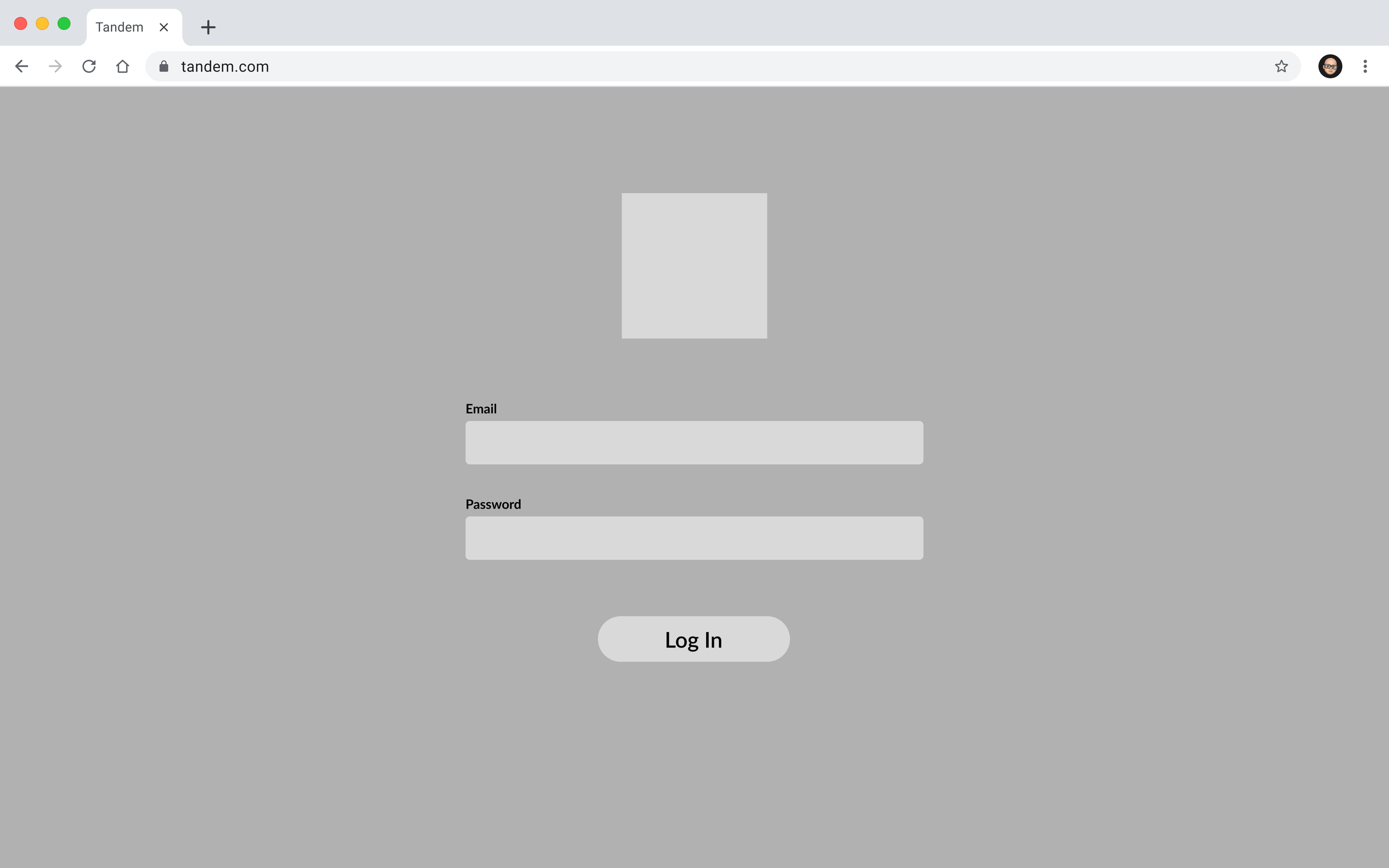
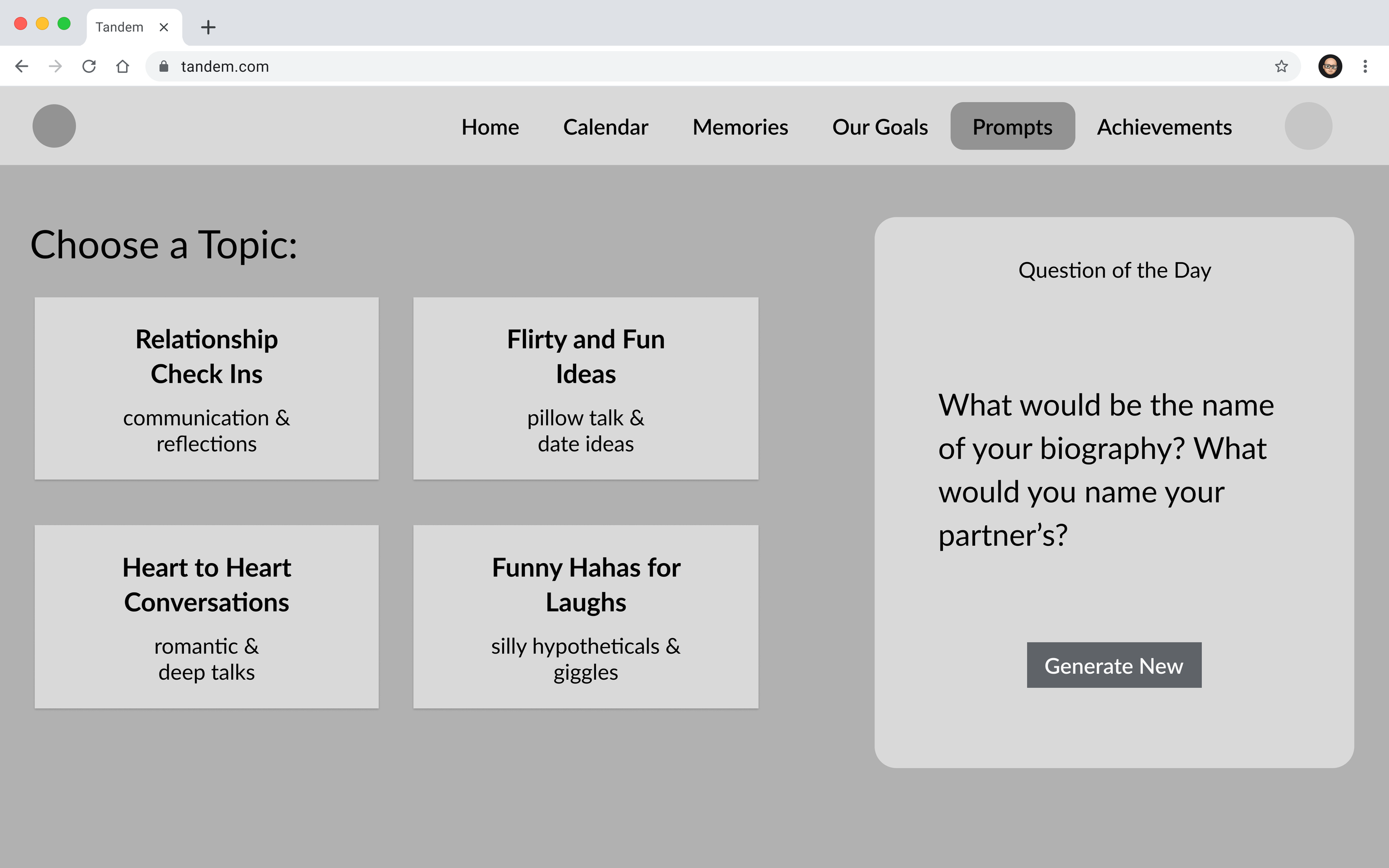
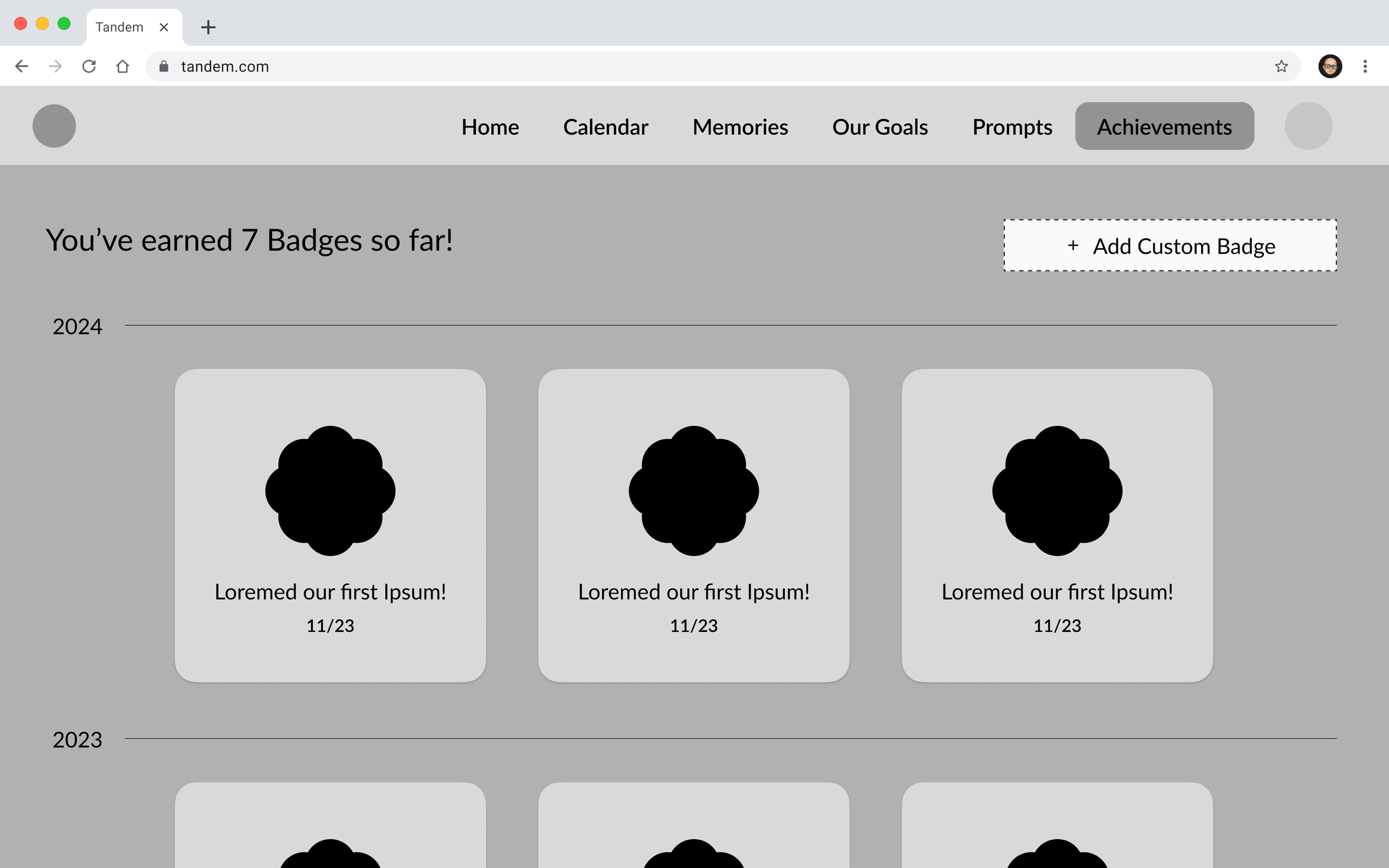
Following our pivot, we needed to rethink the entire product experience. The lo-fi wireframes became a testing ground for new ideas, allowing us to move away from companion-based interactions and instead explore a timeline-centered experience. Through several iterations, we identified the core features that would best support reflection, communication, and shared growth.
Lo-Fi Wireframes
-
![]()
Login
-
![]()
Home Page
-
![]()
Calendar
-
![]()
Memories
-
![]()
Our Goals
-
![]()
Prompts
-
![]()
Achievements
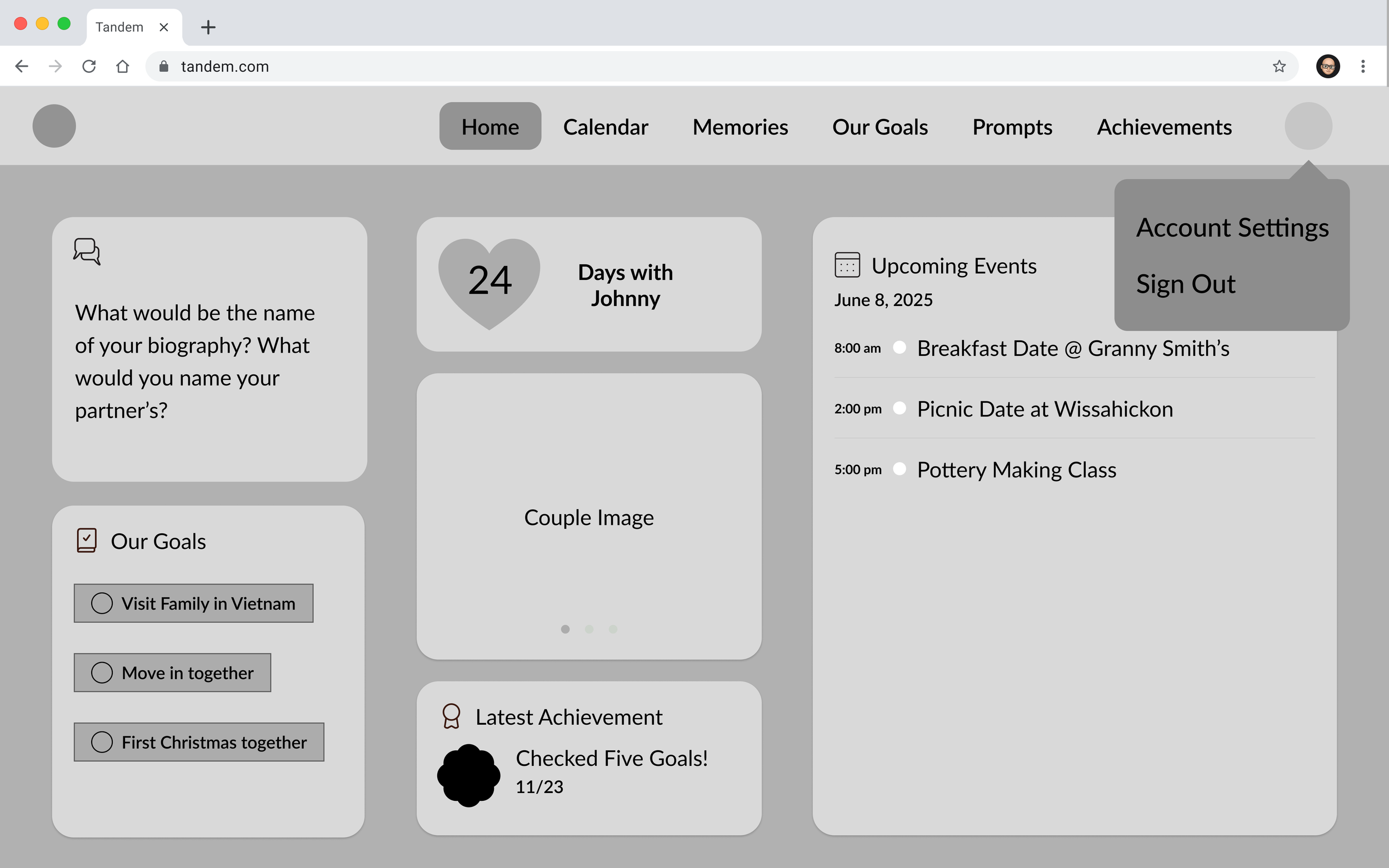
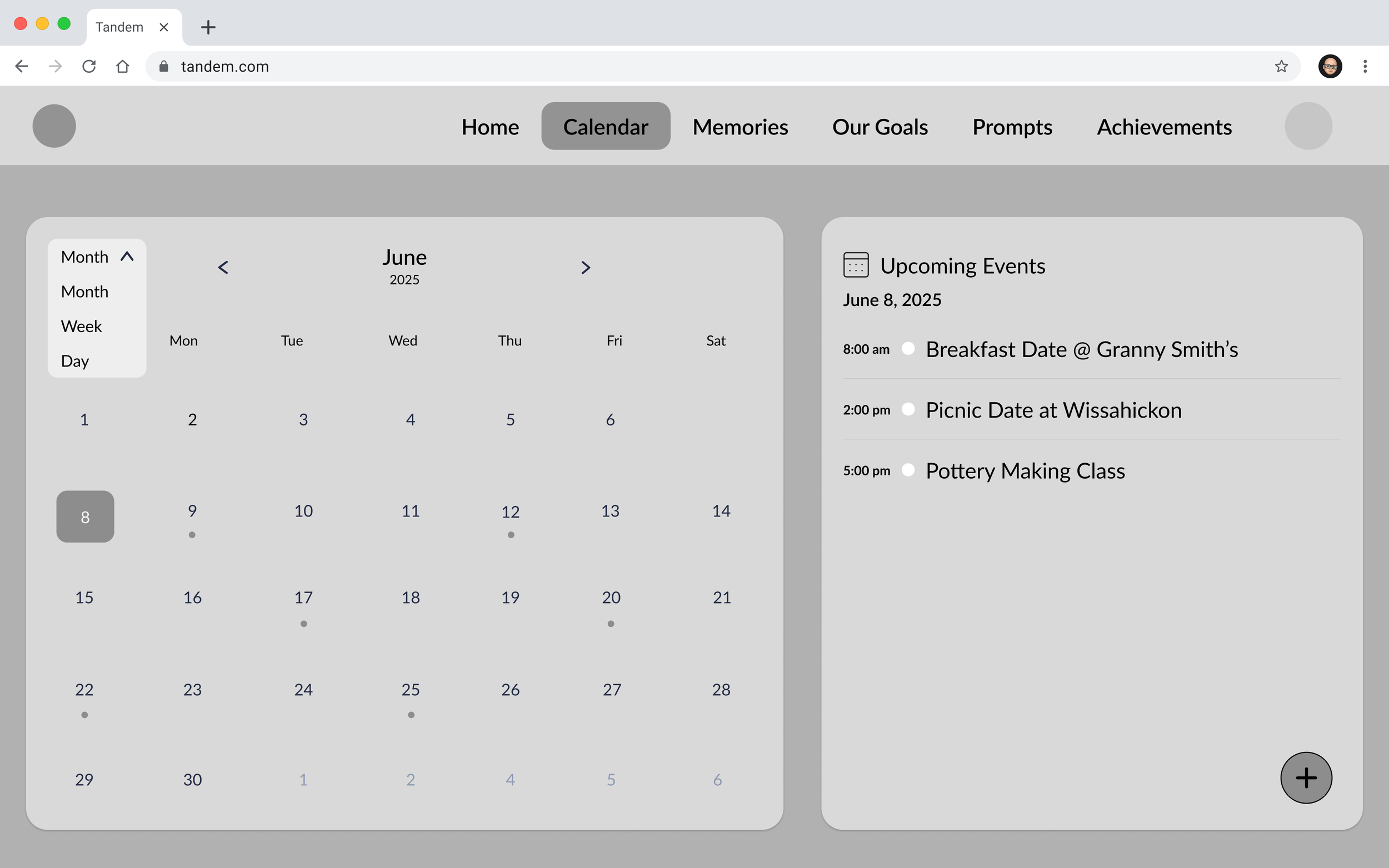
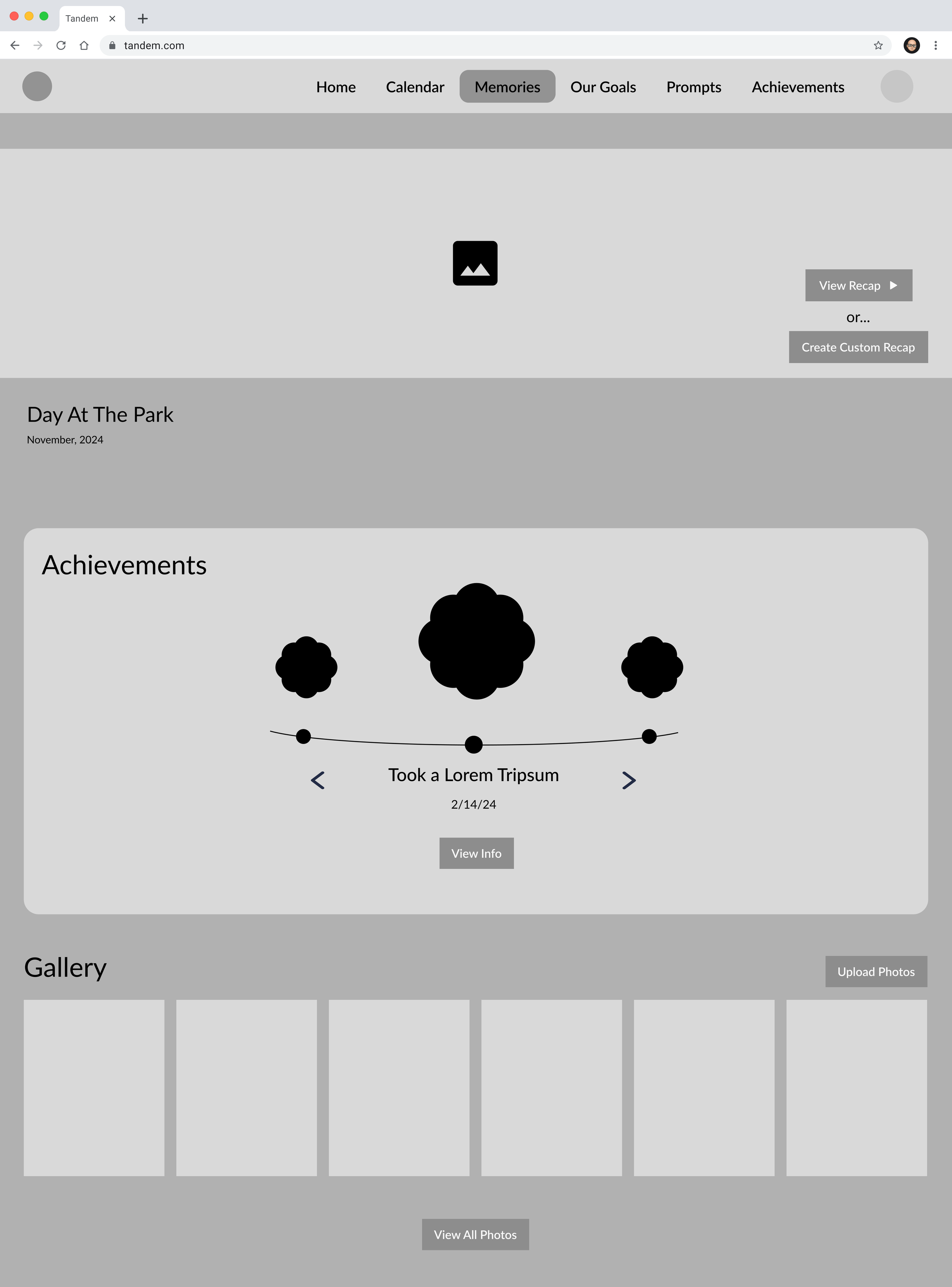
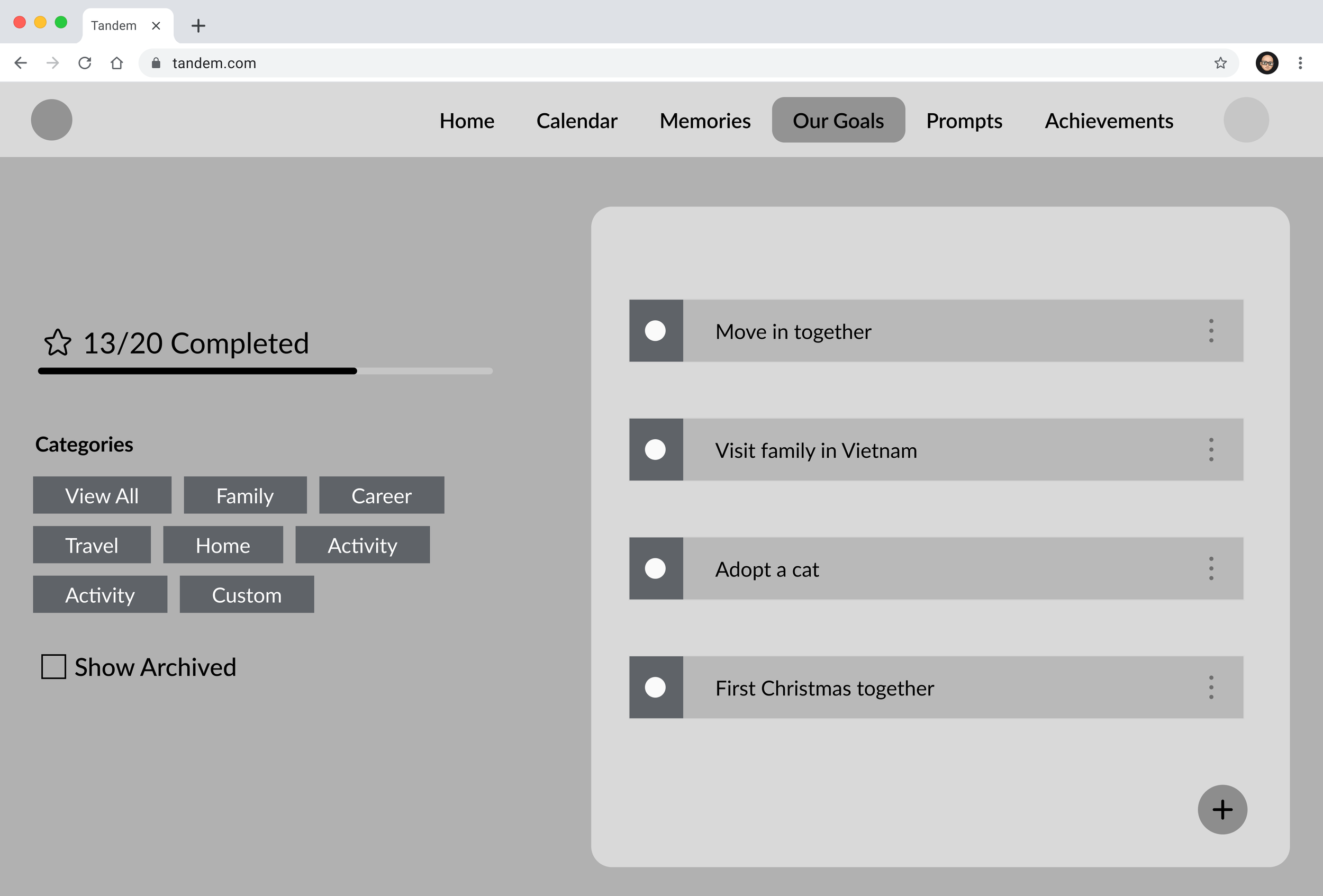
Design Process
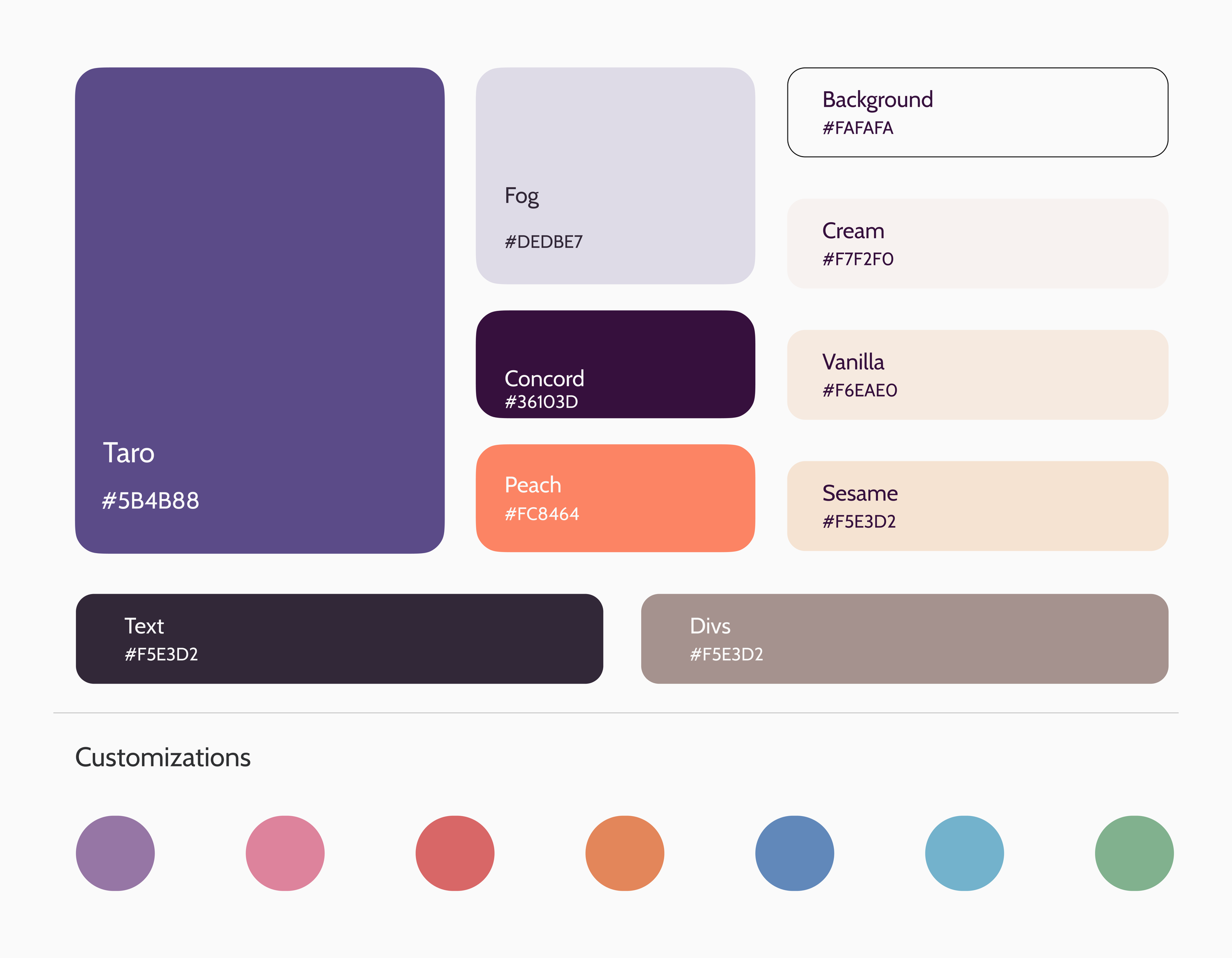
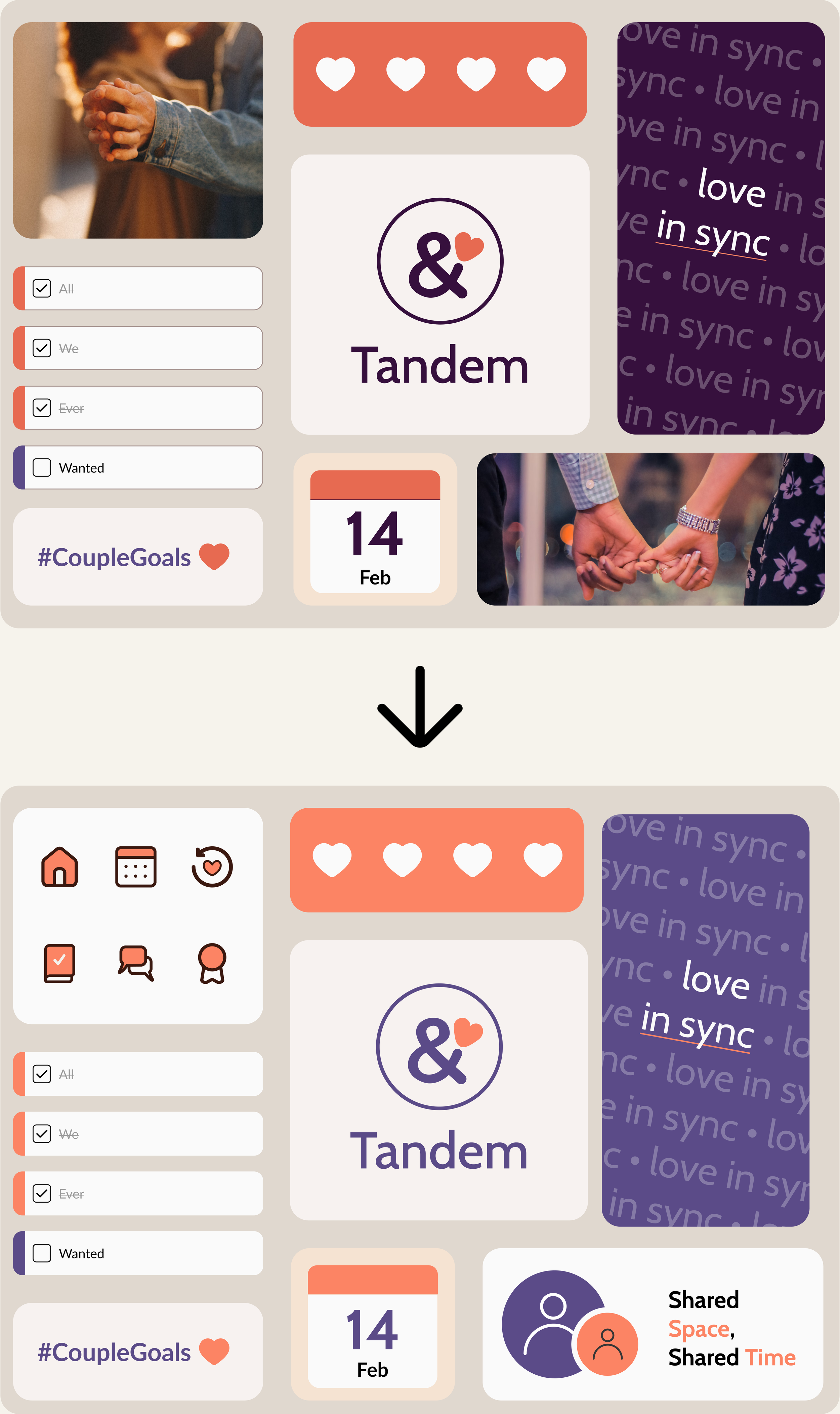
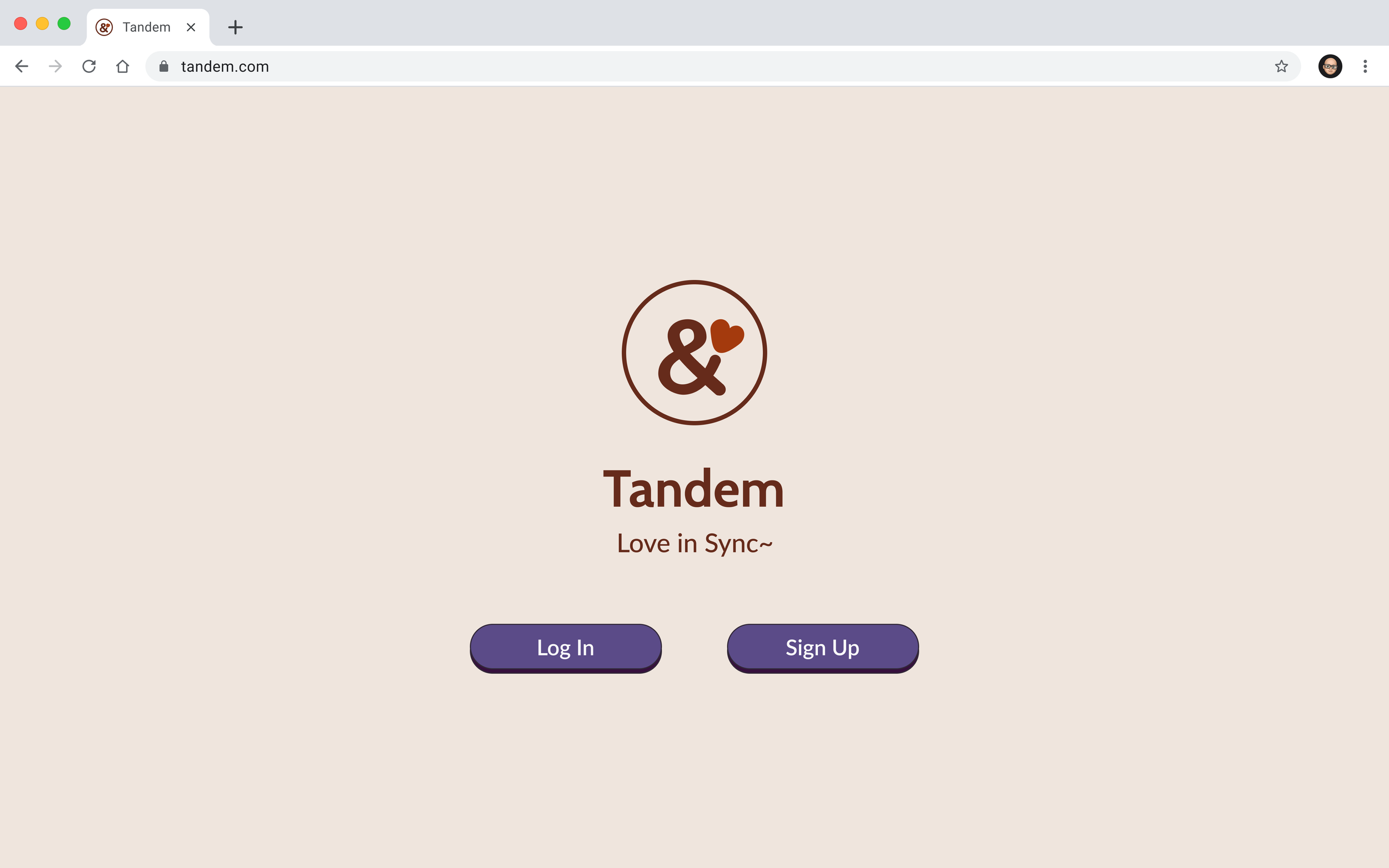
Once the change in project metrics became clearer, the next challenge was to define our visual identity.
We wanted the experience to feel:
Warm, but not overly sentimental
Playful, but not childish
Cozy, but still modern and functional
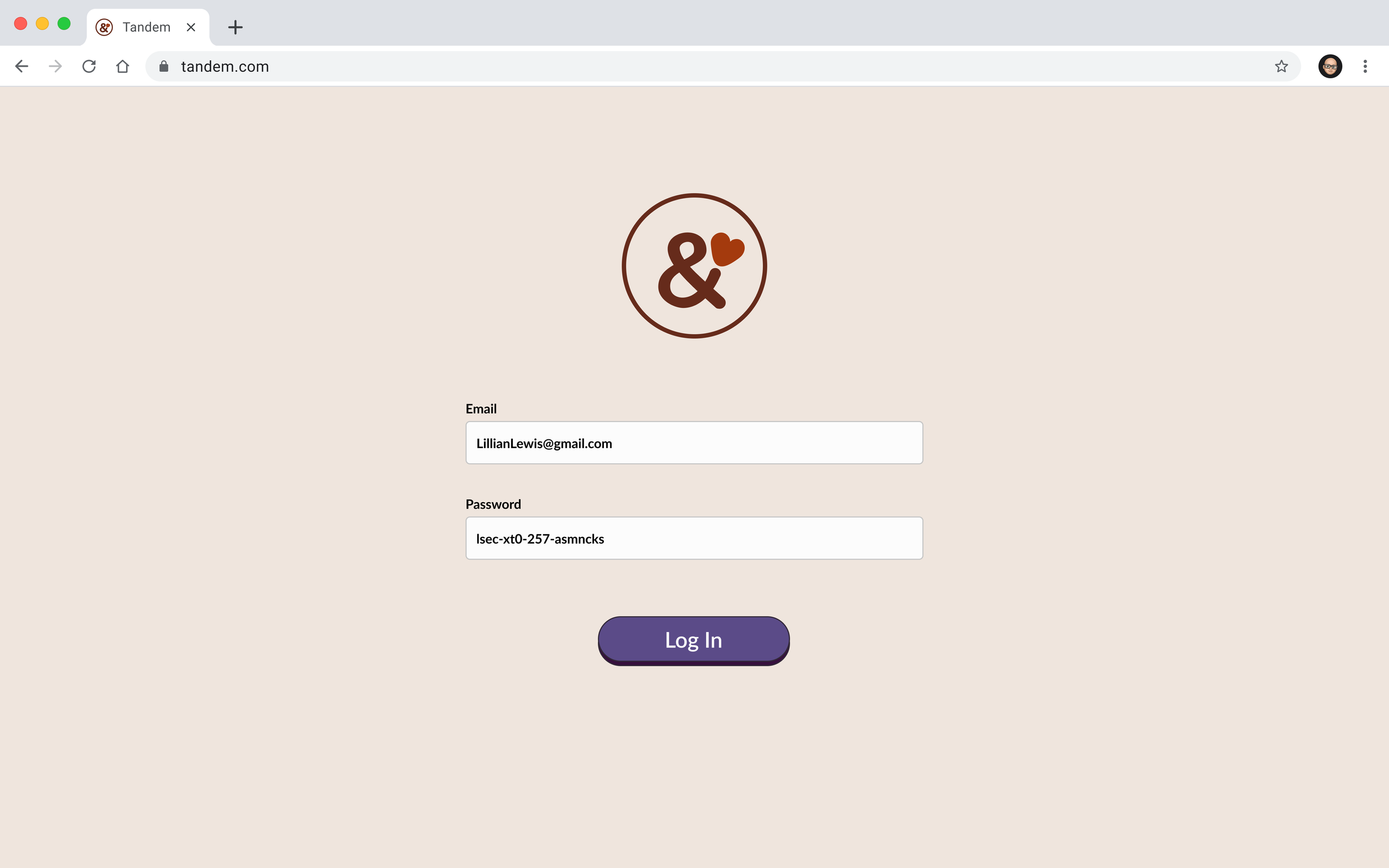
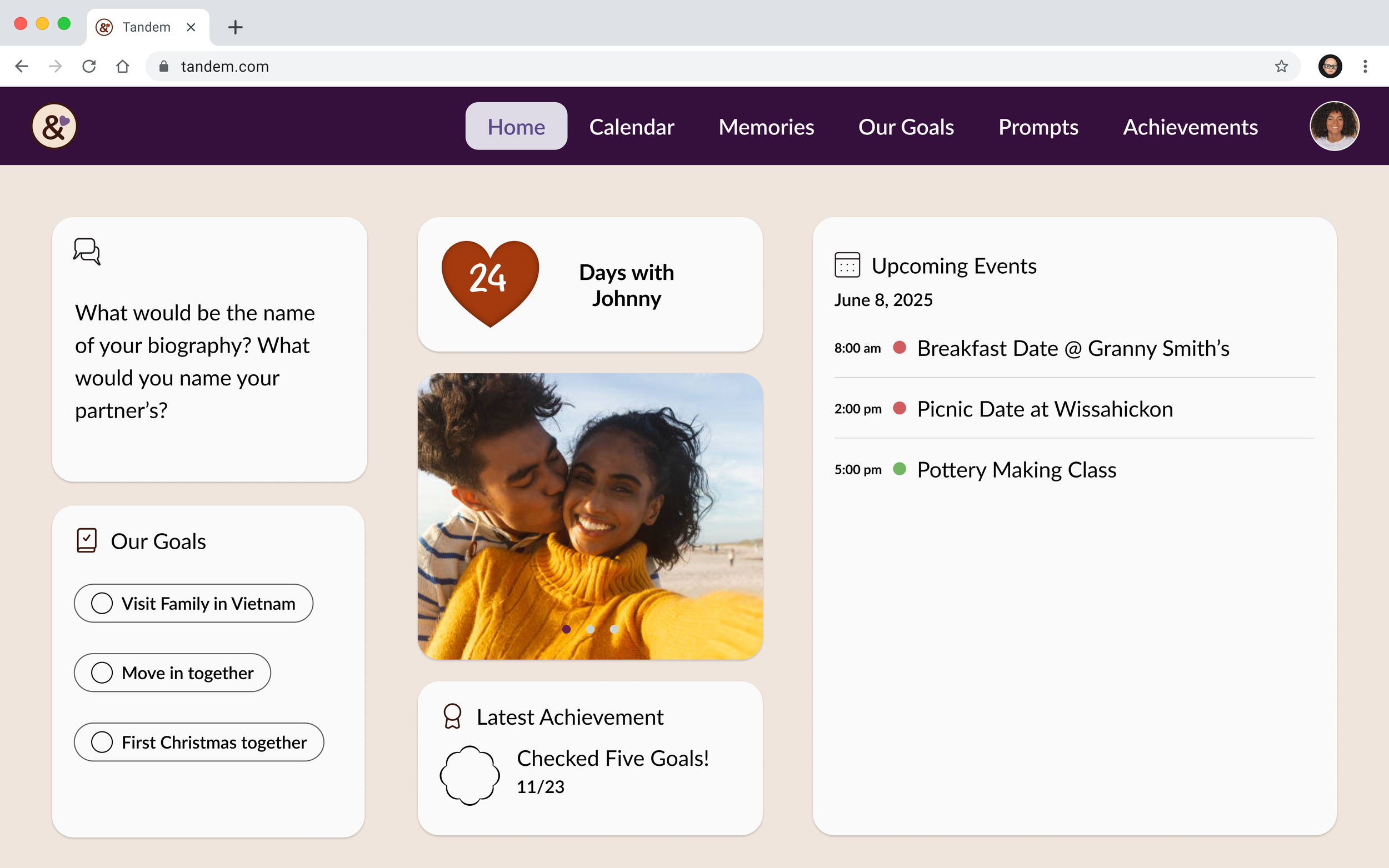
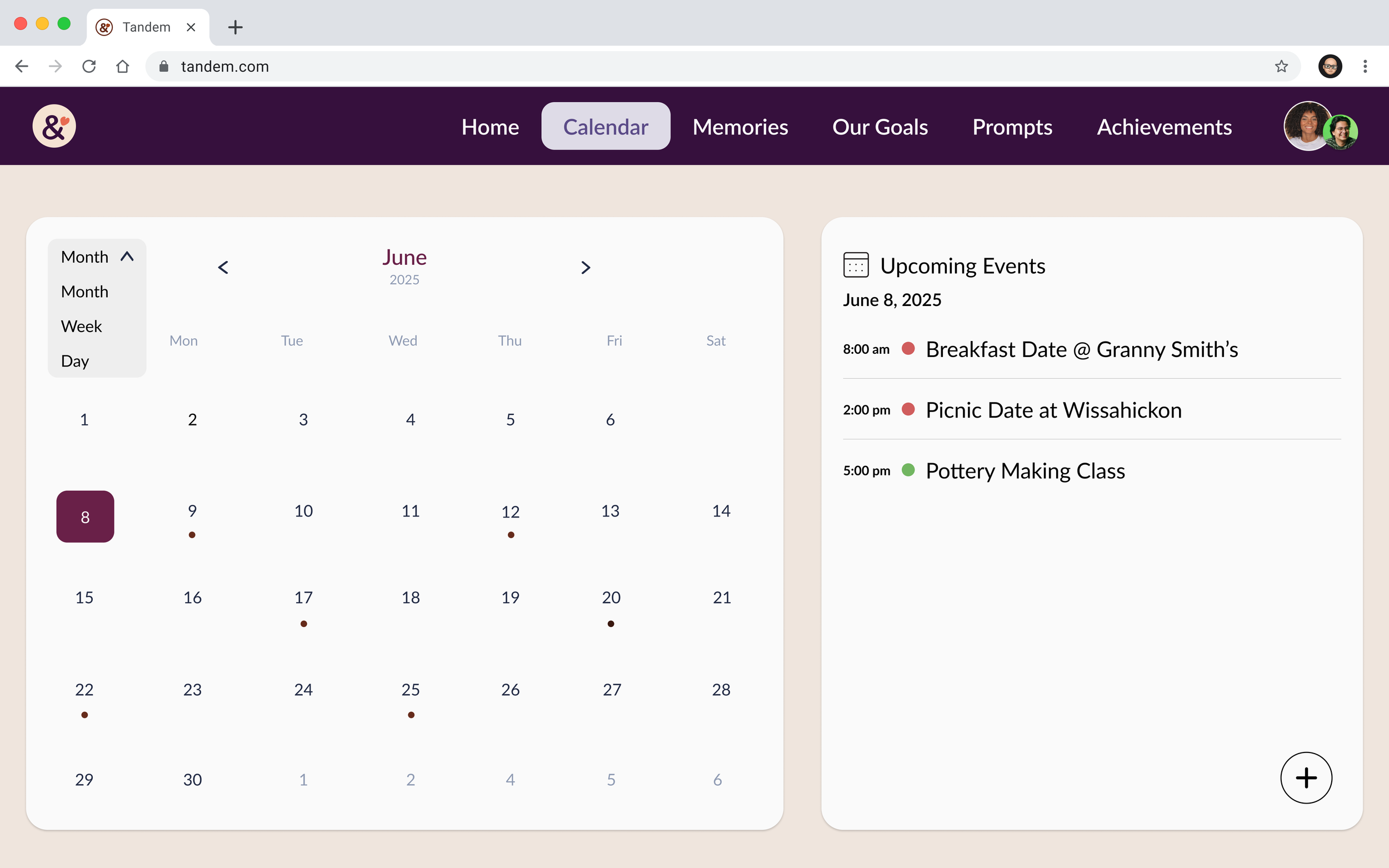
After exploring multiple color palettes and design directions, we developed a visual identity that balanced warmth and simplicity. Soft colors, rounded elements, and scrapbook-inspired details created an inviting atmosphere, while clean layouts and intuitive navigation kept the experience easy to use.
Mid-Fi Wireframes
-
![]()
Landing Page
-
![]()
Login
-
![]()
Home Page
-
![]()
Calendar
-
![]()
Memories
-
![]()
Our Goals
-
![]()
Prompts
-
![]()
Achievements
Outcome
Tandem represents the culmination of nine months of interdisciplinary collaboration, combining UX research, UI design, and full-stack development.
More importantly, the project demonstrated the value of listening to users and embracing iteration.
Our biggest lesson was that meaningful design does not come from protecting original ideas—it comes from adapting when research challenges them.
If given additional time and resources, future iterations of Tandem would include:
Machine learning personalization
Social media integration
Calendar syncing
Photo library connections
Adaptive experiences tailored to relationship growth
Ultimately, Tandem became more than a class project. It became an exploration of how technology can support connection not by replacing human relationships, but by helping people celebrate and grow within them.
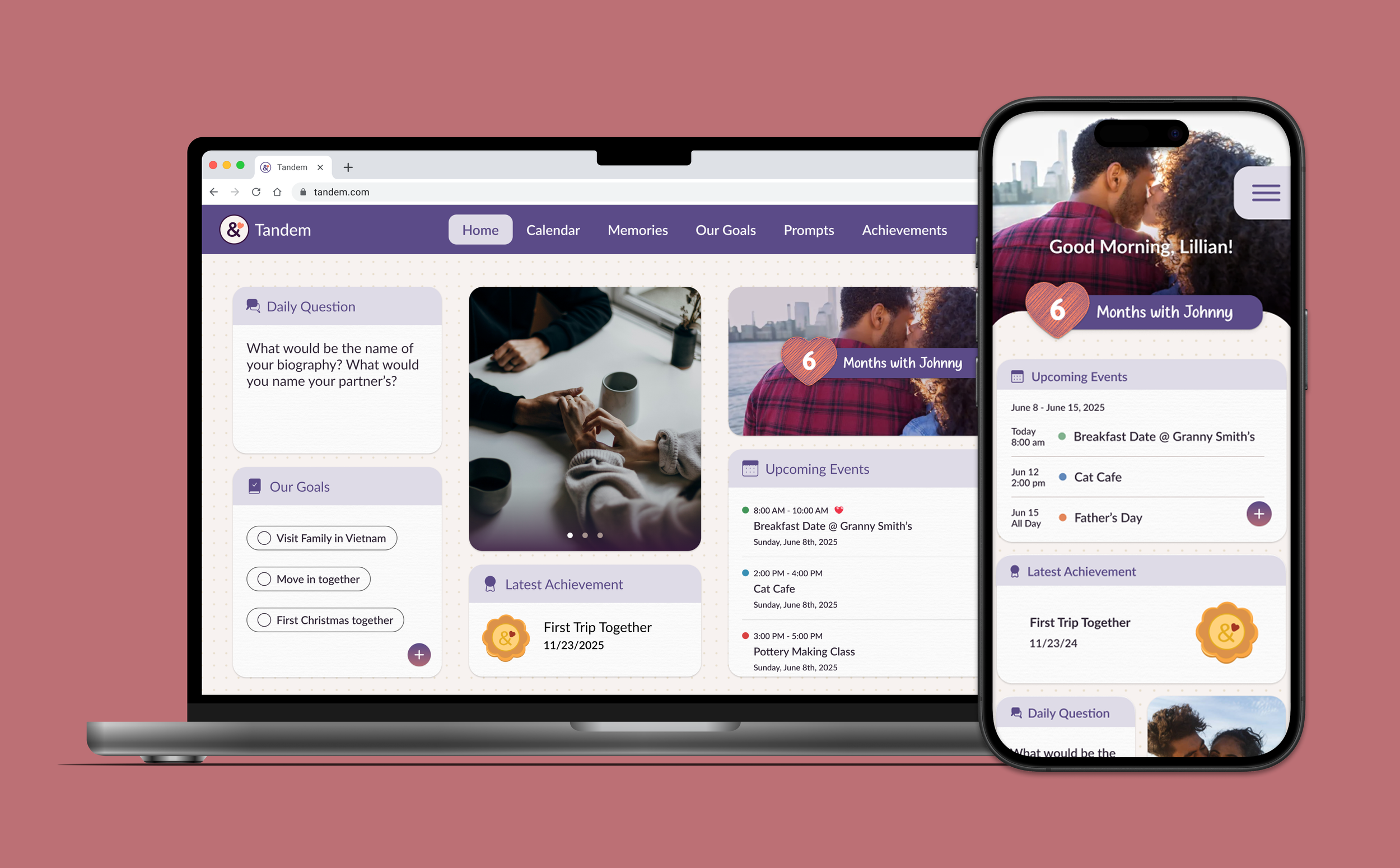
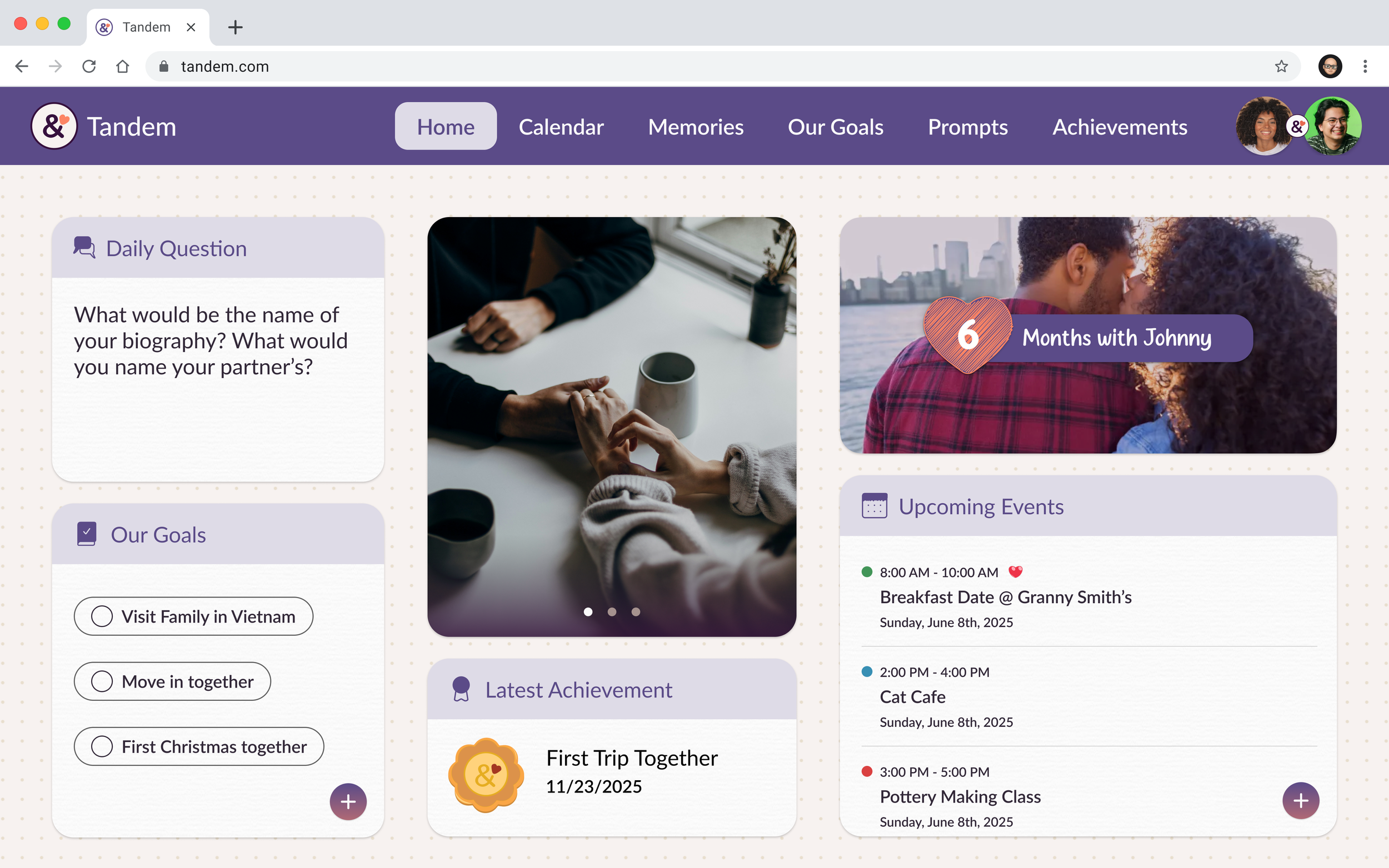
Final designs are shown above on desktop and mobile.